Machine learning—enhanced baseline risk prediction models for cancer therapy related cardiac dysfunction: a systematic review and critical appraisal of methodological quality
European Heart Journal - Digital Health


Abstract
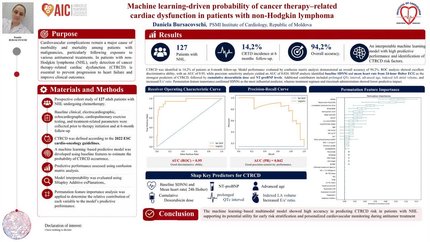
Cancer therapy-related cardiac dysfunction (CTRCD) is a prevalent complication with adverse clinical implications. Guidelines have emphasized the need for reliable baseline risk prediction to guide prevention strategies. While machine learning (ML) has shown promise in cardiovascular medicine, the readiness of ML-based prognostic models for baseline CTRCD risk prediction in cardio-oncology remains unclear.
To systematically review and critically appraise the performance, methodological quality, and clinical applicability of ML-based models for predicting baseline CTRCD risk.
A search on Embase and Medline was conducted up to May 2026. Eligible studies used ML algorithms to estimate CTRCD risk prior to cancer treatment. Data were extracted using an adapted version of the CHARMS checklist. Risk of bias (ROB) and reporting quality were assessed using PROBAST and TRIPOD + AI. Nine studies were included. Seven studies included novel models using multiple clinical and imaging predictors, while two repurposed or validated existing AI-enhanced electrocardiography (ECG) models. The levels of discrimination were at least moderate (AUC 0.65–0.88), calibration was only reported in two studies, and external validation in one. Multiparametric models showed higher performance metrics than ECG-only models but were methodologically constrained. Overall, most studies were limited by variability in outcome definitions, low event rates, limited transparency in reporting, and a lack of reproducibility measures.
Current ML-based models for predicting CTRCD remain underdeveloped for clinical use. The present findings highlight the need for further work to optimize models by incorporating rigorous study designs, with emphasis on methodological clarity, standardized outcome definitions, and external validation to improve reproducibility.
Contributors

Maria Sol Andres
Author
Royal Brompton Hospital London , United Kingdom of Great Britain & Northern Ireland

Vijay Maharahan
Author
Alexandra Pons Rivarola
Author
Luis Garcia Rodriguez
Author
Franck Thuny
Author
Sivatharshini Ramalingam
Author
Matilda Howe
Author
Mamas A Mamas
Author
Amitava Banerjee
Author

Charlotte Manisty
Author
University College London London , United Kingdom of Great Britain & Northern Ireland
Arjun K Ghosh
Author
Aditya S Bharadwaj
Author
Alexander R Lyon
Author
Mohamed O Mohamed
Author
You may be interested in