Population reach and participation rate in opportunistic vs. systematic atrial fibrillation screening: STROKESTOP III
EP Europace Journal


Abstract
Population-based screening for atrial fibrillation (AF) should be considered in elderly individuals to enable AF detection. However, participation in systematic screening programmes is often suboptimal. STROKESTOP III evaluated whether opportunistic screening could improve participation compared with systematic screening.
STROKESTOP III is a cluster-randomized trial including individuals aged 75–76 years from 16 primary care centres in Region Värmland, Sweden. Centres were randomized to systematic screening, using mailed invitations, or opportunistic screening, using invitations during visits.
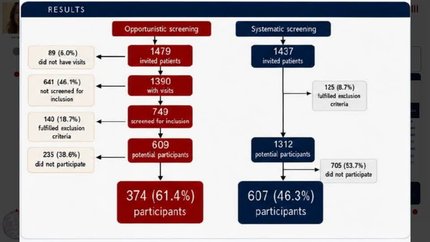
In the systematic arm, 1312 individuals were eligible and invited, of whom 607 participated (46.3%). In the opportunistic arm, 1390 individuals attended participating primary care centres and were potentially eligible for invitation. However, 641 individuals (46.1%) were not assessed for eligibility. Among the 749 assessed individuals, 609 were eligible and 374 participated.
Participation among invited eligible individuals was significantly higher with opportunistic than systematic screening (374/609, 61.4% vs. 607/1,312, 46.3%;
Opportunistic screening increased participation among invited individuals and identified a higher-risk population, but its overall population reach was limited by incomplete eligibility assessment. Combining opportunistic and systematic strategies may optimize reach and participation in AF screening programmes.
Contributors


Michael Ingre
Author
Fredrik Carlstedt
Author
Anders Eriksson
Author
Johanna Star Tenn
Author
Mårten Rosenqvist
Author
Emma Svennberg
Author
You may be interested in