Biodegradable polymer sirolimus-eluting or durable polymer zotarolimus-eluting stents in high bleeding-risk patients with acute coronary syndrome: the BIOFLOW-DAPT randomized trial
European Heart Journal - Acute CardioVascular Care


Abstract
Patients at high bleeding risk (HBR) and acute coronary syndrome (ACS) undergoing percutaneous coronary intervention (PCI) are at high risk of adverse outcomes. We investigated the clinical outcomes and their consistency after biodegradable polymer sirolimus-eluting (BP-SES) or durable polymer zotarolimus-eluting stent (DP-ZES) implantation in HBR patients with or without ACS.
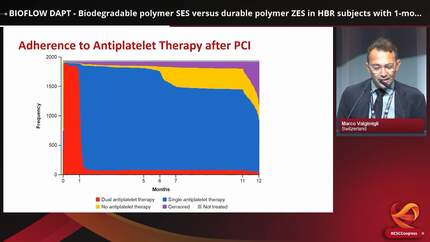
The per-protocol population of the BIOFLOW-DAPT randomized control trial (RCT) consisted of HBR patients with (n = 541) or without ACS (n = 1245) who were randomized to BP-SES or DP-ZES and underwent 1 month dual antiplatelet therapy (DAPT). The primary efficacy and safety endpoints were target lesion failure (TLF), defined as the composite endpoint of cardiac death, target vessel myocardial infarction (TV-MI), or clinically driven target lesion revascularization (cd-TLR) as well as major bleeding defined as BARC 3 or 5 (according to Bleeding Academic Research Consortium classification) and definite/probable stent thrombosis (ST). At 1 year, patients with ACS suffered from higher cardiac death rates (3.4 vs. 1.3%, log-rank
HBR patients with ACS are at higher risk of cardiac death than those without ACS and experience a consistent outcome with BP-SES or DP-ZES followed by 1 month DAPT at 1 year follow-up.
NCT04137510.
Contributors

Nader Mankerious
Author
Rayyan Hemetsberger
Author
Adrian Wlodarczak
Author
Béla Merkely
Author
Henning Kelbæk
Author
Guillaume Cayla
Author
Jacek Legutko
Author
Stefano Galli
Author
Matthieu Godin
Author
Gabor G Toth
Author
Thibault Lhermusier
Author

Benjamin Honton
Author
Francesca Sanguineti
Author
Peter Laurenz Dietrich
Author

Francis Stammen
Author
Bert Ferdinande
Author
Johanne Silvain
Author
Davide Capodanno
Author
Holger Nef
Author
Gert Richardt
Author
Ralph Toelg
Author

You may be interested in