Phenotypic overlap masking MELAS in Turner syndrome: a diagnostic challenge
European Heart Journal - Case Reports


Abstract
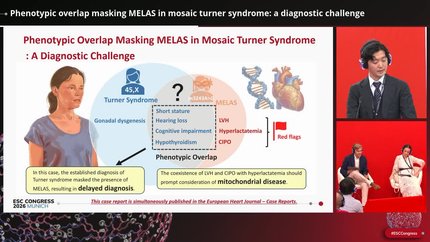
Mitochondrial encephalomyopathy, lactic acidosis, and stroke-like episodes (MELAS) is a multisystemic disorder that can present with diverse clinical features, including cardiomyopathy and chronic intestinal pseudo-obstruction. However, diagnosing MELAS can be challenging when its manifestations overlap with other genetic syndromes, leading to diagnostic anchoring and potential mismanagement.
A 51-year-old woman with mosaic Turner syndrome presented with concentric left ventricular hypertrophy and mildly reduced systolic function (left ventricular ejection fraction 45%). Her medical history included childhood-onset hearing loss, hypothyroidism, and recurrent intestinal obstruction of unknown etiology, which had been previously attributed to Turner syndrome or its comorbidities. Despite resolution of bowel symptoms during prior hospitalizations, she exhibited persistent hyperlactataemia (4.55 mmol/L), a diagnostic red flag. Cardiac magnetic resonance imaging showed patchy mid-wall late gadolinium enhancement, suggesting a non-ischaemic process. Family history revealed a maternal pattern of cardiomyopathy and stroke-like episodes. Genetic analysis confirmed the m.3243A > G mitochondrial DNA mutation (heteroplasmy 23%), establishing a diagnosis of MELAS. Earlier recognition of mitochondrial dysfunction might have avoided a previous unnecessary laparotomy performed for suspected intestinal ischaemia.
This case illustrates the clinical challenge of phenotypic masking; features of Turner syndrome masked the underlying MELAS, resulting in a significant diagnostic delay. The coexistence of unexplained cardiomyopathy, recurrent pseudo-obstruction, and persistent hyperlactataemia should prompt consideration of mitochondrial disease, even in patients with an established genetic diagnosis. Clinicians must remain vigilant for multisystemic ‘red flags’ to avoid diagnostic anchoring and ensure appropriate metabolic and genetic evaluation.
Contributors


Daisuke Ueshima
Author
Joe Onaka
Author
Kazue Tajima
Author
Piotr Nikodem Rudzinski
Author
Nisha Mistry
Author
Deepty Ranganathan
Author
You may be interested in