Cardiac myxoedema due to severe hypothyroidism mimicking myopericarditis: a case report
European Heart Journal - Case Reports


Abstract
Severe hypothyroidism may present with cardiac manifestations, including pericardial effusion and myocardial oedema, which can mimic inflammatory myocardial and pericardial diseases. Recognition of this potentially reversible condition is crucial in the differential diagnosis of patients presenting with suspected myopericarditis.
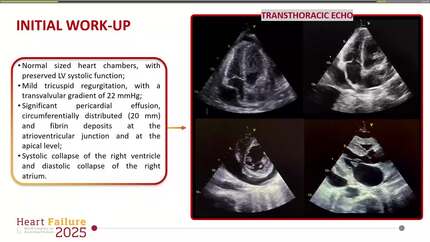
A 42-year-old woman presented with recurrent chest pain initially suspected as relapsing myopericarditis following a recent SARS-CoV-2 infection. The electrocardiogram showed sinus rhythm with diffuse low-voltage QRS complexes. Transthoracic echocardiography demonstrated preserved biventricular systolic function and a circumferential pericardial effusion measuring up to 8 mm, without echocardiographic signs of cardiac tamponade. Laboratory tests revealed a markedly elevated creatine phosphokinase (>3000 U/L), mild troponin elevation, and severe hypothyroidism (thyroid-stimulating hormone: 538 µU/mL) with positive thyroid antibodies. Cardiac magnetic resonance demonstrated diffuse biventricular myocardial oedema and mild-to-moderate pericardial effusion without late gadolinium enhancement. In the context of severe hypothyroidism, these findings were considered consistent with cardiac myxoedema. Thyroid hormone replacement resulted in rapid clinical and echocardiographic improvement. The overall clinical, biochemical, and imaging findings supported severe hypothyroidism as the underlying cause.
This case highlights severe hypothyroidism as a reversible cause of myocardial oedema that may mimic inflammatory myopericarditis and should be considered in the differential diagnosis of patients presenting with myocardial oedema and pericardial effusion.
Contributors


Patrizia Pedrotti
Author
Paolo Dalino Ciaramella
Author
Giulia Maida
Author
Lucia Occhi
Author
Piero Gentile
Author
Cristina Giannattasio
Author
Christoph Jensen
Author
Nelya Oryshchyn
Author
Nidhish Tiwari
Author
Deepti Ranganathan
Author
You may be interested in