Successful management of cardiac tamponade due to right ventricular perforation following temporary pacing wire removal after primary percutaneous coronary intervention at a district general hospital: a case report
European Heart Journal - Case Reports


Abstract
Temporary transvenous pacing is frequently required in inferior ST-elevation myocardial infarction (STEMI) complicated by high-grade atrioventricular block. Right ventricular perforation is a rare but life-threatening complication that may present after wire removal rather than at insertion, complicating recognition. Management is particularly challenging in district general hospitals (DGHs) without on-site cardiothoracic surgery.
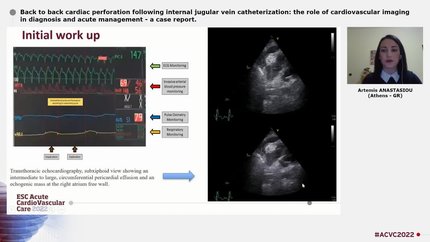
A 62-year-old woman presented in cardiogenic shock to a DGH with inferior STEMI and complete atrioventricular block requiring emergency temporary transvenous pacing and primary percutaneous coronary intervention (PPCI) to the right coronary artery. Approximately 15 min after pacing wire removal, she developed cardiac tamponade with rapid re-accumulation of pericardial effusion despite pericardiocentesis. Repeat coronary angiography excluded coronary perforation. Bedside agitated saline contrast echocardiography in subcostal views confirmed right ventricular perforation by demonstrating echogenic microbubbles within the pericardial effusion. She was stabilized with auto-transfusion and inotropic support and transferred for emergency surgical repair at a regional tertiary cardiothoracic centre. She achieved complete cardiac recovery with preserved biventricular function at long-term follow-up.
This case illustrates that life-threatening procedural complications can be successfully managed in DGHs delivering PPCI without co-located cardiothoracic services. The decisive factors were prompt recognition, systematic diagnostic re-evaluation, application of an established bedside diagnostic technique, aggressive haemodynamic stabilization including auto-transfusion, and rapid escalation via direct consultant-to-consultant communication. This integrated approach was critical in achieving an excellent patient outcome. Standing transfer agreements with regional cardiothoracic centres would further reduce time to definitive surgery in comparable emergencies.
Contributors

You may be interested in