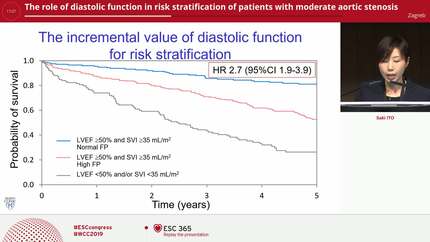
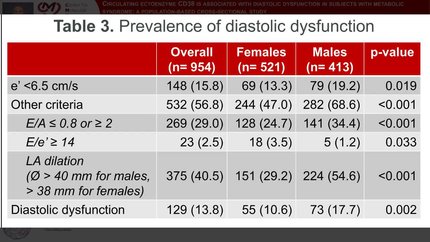
Diastolic dysfunction is linked to the initiation and progression of aortic stenosis: a hypothesis
European Heart Journal


Abstract
The conventional paradigm in aortic stenosis (AS) holds that progressive valvular obstruction increases afterload, leading to left ventricular remodelling and dysfunction. However, emerging artificial intelligence (AI)-based observational data challenge this sequence. Diastolic dysfunction risk scores, generated without valve imaging, predict future AS even in individuals with aortic sclerosis. This paradox suggests that diastolic dysfunction is not simply a downstream effect but a barometer of a shared upstream pathophysiological state. In this hypothesis, diastolic dysfunction identifies a mechano-inflammatory milieu marked by arterial stiffness, elevated afterload, and disrupted ventriculo-valvular-vascular coupling, which distorts aortic flow and shear stress. This environment promotes structural and functional remodelling in both the myocardium and the aortic valve via shared signalling pathways—yet is more readily detected in the myocardium. By linking AI-based phenotyping with biomechanics and inflammation, this hypothesis challenges current causal hierarchies and proposes a new framework for early risk assessment in calcific AS.
Contributors

You may be interested in