Haemolysis and renal effects across pulsed field ablation systems in atrial fibrillation
EP Europace Journal


Abstract
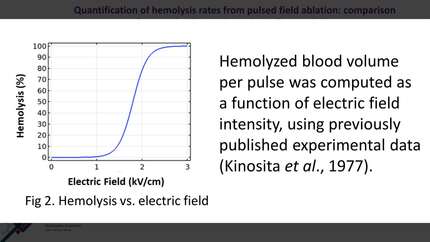
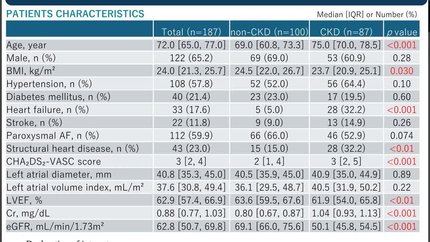
Pulsed field ablation (PFA) is a non-thermal energy modality for ablation of atrial fibrillation (AF). Although PFA has demonstrated an excellent overall safety profile, increasing evidence suggests an association with intravascular haemolysis, and acute kidney injury (AKI). However, the extent of haemolysis across different PFA catheters remains poorly characterized and warrants further investigation.
We prospectively enrolled 239 patients undergoing AF ablation using the pentaspline (
In this large cohort, contemporary PFA systems appear safe but catheter design influences the extent of haemolysis, AKI, and myocardial injury. The pentaspline catheter was associated with the greatest haemolytic effect and higher transient AKI, without clinically relevant reductions in haemoglobin or persistent renal impairment. Higher levels of myocardial injury in the pentaspline and balloon-in-basket groups correspond to the larger lesion footprints of these devices.
Contributors


Aldo Marrese
Author
Andrea Urbani
Author
Joseph Kheir
Author
Soroosh Najafi
Author
Melanie Gunawardene
Author
Alexandra Marx
Author
Julia Lurz
Author
Boris Schmidt
Author


You may be interested in