A case report of an S-ICD–recorded asystole due to SMART pass deactivation in a patient with non-obstructive hypertrophic cardiomyopathy
European Heart Journal - Case Reports


Abstract
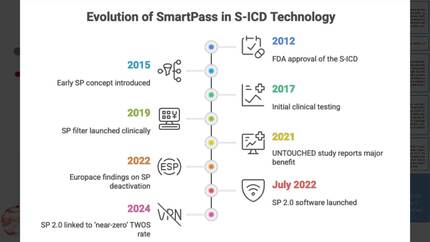
The SMART pass (SP) algorithm of the subcutaneous implantable cardioverter-defibrillator (S-ICD; Boston Scientific Emblem) uses a high-pass filter to reduce inappropriate shocks due to signal oversensing. In cases of small to no R-wave amplitude, the SP algorithm is automatically deactivated, and an electrocardiogram (ECG) is recorded.
A 63-year-old patient with hypertrophic cardiomyopathy (HCM) without left ventricular outflow tract obstruction underwent implantation of an S-ICD. When the patient reported syncope months later, device interrogation revealed SP deactivation due to a 22-second asystole, consistent with the timing of the syncope. Prior to the event, there was no indication of future pacing requirement. The patient had a stable two-vessel coronary artery disease as well as unaltered echocardiographic findings, including preserved left ventricular ejection fraction. The S-ICD was replaced by a transvenous dual-chamber implantable cardioverter-defibrillator.
Although bradycardia detection is not available in the S-ICD system, in our case, it was enabled due to ECG recording performed during SP deactivation, which outlines the importance of careful investigation. Since bradyarrhythmia in HCM is considered rare, it has been studied far less extensively than atrial and ventricular tachyarrhythmia. There is substantial evidence that myocardial fibrosis is a significant predictor of ventricular tachycardia and sudden cardiac death. However, more extended research is required to further investigate the association between myocardial fibrosis and bradyarrhythmia in patients with HCM, as well as to evaluate the potential of magnetic resonance imaging-based screening to identify patients at risk requiring future pacing.
Contributors

Wim Rother
Author
Thomas Hucko
Author
Kristof Graf
Author
Sebastian Spencker
Author
Jim O'Brien
Author
Reshma Amin
Author
Deepti Ranganathan
Author
You may be interested in