Chronic brucellosis presenting as cardiac implantable electronic device–related endocarditis: diagnostic challenges and management—a case report
European Heart Journal - Case Reports


Abstract
Brucellosis is a zoonotic infection that may rarely involve the cardiovascular system, causing infective endocarditis. Diagnosis of Brucella-associated cardiac implantable electronic device (CIED) endocarditis is challenging because of its indolent course and frequently negative blood cultures.
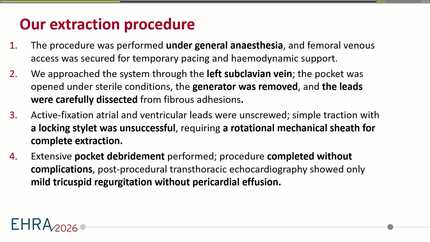
A 42-year-old shepherd with an implantable cardioverter–defibrillator had experienced fever, myalgia, arthralgia, and weight loss for approximately 18 months. During this period, investigations for malignancy and rheumatologic diseases were unrevealing. He was subsequently diagnosed with brucellosis at another institution based on a Brucella serum agglutination test positive at a titre of 1:1280, and antibiotic therapy was initiated. Three weeks later, he was referred to our centre because of generator pocket erosion and purulent drainage. Tissue cultures from the pocket and repeat blood cultures showed no growth. Transoesophageal echocardiography demonstrated a 14 × 8 mm mobile mass attached to the right ventricular lead, suspicious for vegetation. Fluorine-18 fluorodeoxyglucose positron emission tomography/computed tomography (18F-FDG PET/CT) demonstrated increased metabolic uptake around the lead. According to the diagnostic criteria of the 2023 European Society of Cardiology Endocarditis Guidelines, Brucella CIED-related endocarditis was diagnosed. Antimicrobial therapy was revised, followed by complete percutaneous device extraction. The patient recovered without recurrence, and device re-implantation was not indicated.
Brucella infection should be considered in patients from endemic regions or high-risk occupational groups presenting with culture-negative CIED infection. In such cases, serological testing combined with transoesophageal echocardiography and 18F-FDG PET/CT is essential for diagnosis. Complete device extraction with targeted antimicrobial therapy is crucial, and re-implantation should be individualized.
Contributors

Taner Ulus
Author
Emine Gokcen Kuru
Author
Emre Entok
Author
Felix Wiedmann
Author
Nicole Ceschia
Author
Dzhem Farandzha
Author
Deepti Ranganathan
Author
You may be interested in