When the line crosses the line: a retrospective analysis of catheter-related thrombosis risk beyond the SVC- RA junction
European Heart Journal Supplements


Abstract
Catheter-related Right Atrial Thrombosis (CRAT) is a serious but under-recognized complication of central venous catheter (CVC) placement. While many factors contribute to its development, the precise contribution of catheter tip location remains poorly defined, particularly in cancer patients.
To investigate the association between CVC tip position and the incidence of CRAT in cancer patients.
This retrospective single-center study included all patients with CVCs who underwent transthoracic echocardiography for any indication in 2024. Patients were classified into two groups based on catheter tip position relative to the cavoatrial junction (CAJ), as visualized via transthoracic echocardiography: Group A: Tip position proximal to the CAJ; Group B: Tip position crossing the CAJ. CRAT frequency was compared between groups using Fisher’s exact test (two-tailed, α = 0.05). Transesophageal echocardiography (TEE) confirmed CRAT cases were defined. The exact catheter tip location in CRAT cases was measured in the standard TEE bicaval view.
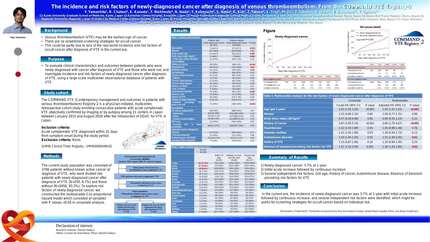
A total of 373 patients were included, 342 in Group A (catheter tip proximal to the CAJ) and 31 in Group B (catheter tip crossing the CAJ). The incidence of CRAT was significantly higher in Group B compared to Group A (32.2% vs 0.3%; p < 0.001), with an odds ratio of 146.0 (95% confidence interval [CI]: 17.2–1233.0; p < 0.001). Group A patients were significantly older than Group B (52.7 ± 16.9 vs. 35.5 ± 15.5 years; p < 0.001). No statistically significant differences were observed between groups in sex, history of thrombosis, body mass index, platelet count, tumor type/stage, or echocardiographic cardiac structure (p > 0.05 for all). Notably, catheter tips positioned >1 cm beyond the CAJ were exclusively associated with atrial wall-attached thrombi, whereas tips within 1 cm of the CAJ were associated with catheter tip-adherent thrombi.
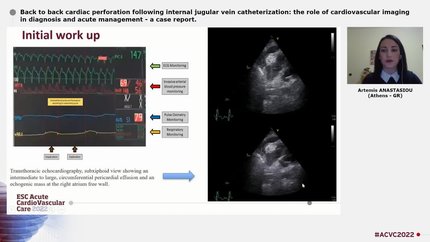
Catheter tip position crossing the CAJ is a profound, independent risk factor for CRAT in cancer patients. These results underscore the critical need for intraprocedural verification of the catheter tip location—preferably via echocardiography or ultrasound—and immediate repositioning if the CAJ is crossed. Implementing this protocol as a standard component of CVC placement care is essential to prevent CRAT, particularly in high-risk oncology populations where thrombotic complications may exacerbate morbidity and mortality. TTE Catheter tip and CRAT relation TEE Catheter tip and CRAT relation
Contributors

W A L E E D Dawelbeit
Author
B O R I S Itkin
Author
Y A S I R Almalki
Author
A H M E D Mustafa Basuoni
Author
You may be interested in