A case series of confirmed Neisseria gonorrhoeae native mitral valve infective endocarditis: presentation and management
European Heart Journal - Case Reports


Abstract
Infective endocarditis (IE) arising as a complication of disseminated gonococcal infection (DGI) is uncommon. The condition most frequently involves the aortic or pulmonary valves, with 12 cases affecting the native mitral valve reported in the literature to date. We describe a rare occurrence of three patients presenting with native mitral valve gonococcal endocarditis.
Three unrelated patients presented to our unit over a 15-month period with DGI. The clinical presentations varied, and although sexually active, no recent prodromal history of DGI were reported, except for one patient who had non-specific complaints of tender joints potentially in keeping with gonococcal infection. Two patients underwent a surgical mitral valve replacement due to significant valve destruction, and one underwent mitral valve repair. Laboratory testing for organism identification required a multi-modal strategy in all patients. One patient demised as a complication of over-anticoagulation.
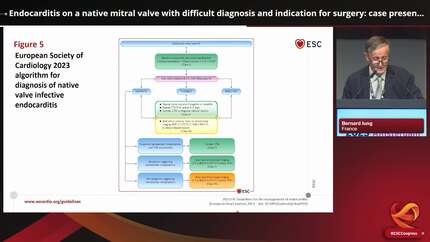
Diagnosis and treatment of patients presenting with IE should follow the 2023 ESC Guidelines on Infective Endocarditis. A multimodal strategy should be employed in identifying the organism, especially in the case of culture-negative endocarditis. Due to the extensive tissue destruction seen with gonococcal IE the patients mostly require valve replacement. However, valve repair must be considered/aimed for in our patients given the morbidity and mortality with warfarin therapy as highlighted by this case series. Local sensitivity profiles and resistance testing should be considered when treating DGI.
Contributors

Stefan Van Der Westhuizen
Author
Johan Koen
Author
Jan Steyn
Author
Danielle Meintjies
Author
Scott Lee-Jones
Author
Jacques Janson
Author
Anton Frans Doubell
Author
Christoph Sinning
Author
Deepti Ranganathan
Author
You may be interested in