Takotsubo syndrome mimicking left anterior descending coronary artery injury after left bundle branch area pacing: a case report
European Heart Journal - Case Reports


Abstract
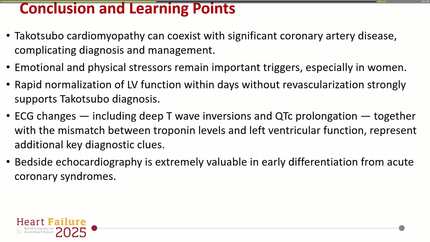
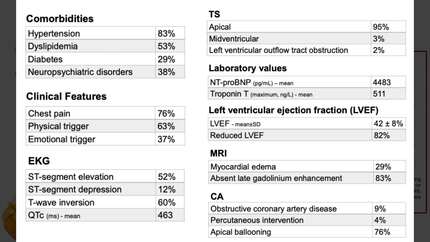
Takotsubo syndrome (TTS) is characterized by reversible left ventricular systolic dysfunction that mimics acute coronary syndrome and is often triggered by physical or emotional stress. Left bundle branch area pacing (LBBAP) has emerged as a physiological pacing strategy but requires deep septal lead placement, which may place the lead close to the left anterior descending coronary artery (LAD). When chest discomfort occurs after LBBAP, differentiation from coronary artery injury is essential.
An 81-year-old woman with complete atrioventricular block underwent pacemaker implantation using LBBAP. The following day, she developed chest discomfort with elevations in creatine kinase and high-sensitivity troponin I levels. Transthoracic echocardiography revealed wall motion abnormalities extending from the anterior wall to the apex. Because LAD injury was suspected, contrast-enhanced computed tomography (CT) was performed. The lead tip was located near the proximal LAD, but no coronary artery injury or contrast extravasation was observed. ECG-gated CT demonstrated an apical ballooning pattern not confined to a single coronary territory. Based on these findings and the reversible clinical course, TTS was diagnosed. The patient was treated conservatively, and follow-up echocardiography 6 months later showed recovery of left ventricular systolic function.
Acute coronary syndrome–like findings after LBBAP require exclusion of coronary artery injury because of the anatomical proximity between the septal lead and the LAD. However, when wall motion abnormalities extend beyond a single coronary territory, TTS should be considered in the differential diagnosis. Multimodality imaging, including CT, may help distinguish these conditions.
Contributors

Yuji Kaneko
Author
Tatsuro Hitsumoto
Author
Masato Tada
Author
Takuya Shimura
Author
Akira Itoh
Author
Jakob Lüker
Author
Armen Kocharian
Author
Deepti Ranganathan
Author
You may be interested in