Intracoronary and tailored vasodilator therapy for refractory ventricular fibrillation storm triggered by multivessel coronary spasm: a case report
European Heart Journal - Case Reports


Abstract
Multivessel vasospastic angina (VSA) is a recognized cause of malignant ventricular arrhythmia. Although guideline-directed vasodilator therapy and implantable cardioverter-defibrillators (ICDs) are recommended, some patients remain at risk for refractory ventricular fibrillation (VF). To date, no strategy has been established for these cases.
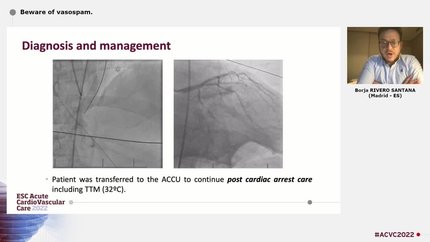
A 67-year-old man experienced a VSA-related ST-elevation myocardial infarction complicated by VF, leading to subcutaneous ICD implantation. The patient remained stable for 1 year on medications without non-adherence or device therapies. One year later, the patient experienced out-of-hospital cardiac arrest due to a recurrent VF storm. Coronary angiography revealed intact arteries with diffuse spasms. Despite mechanical circulatory support, VF persisted and was unresponsive to repeated ICD shocks and external defibrillation. Repeat coronary angiography confirmed multivessel spasm. Intracoronary vasodilator administration, followed by defibrillation-terminated VF and subsequent tailored optimization of oral vasodilator therapy, prevented recurrence.
This case demonstrates that intracoronary vasodilator therapy combined with personalized drug adjustment may represent a valuable therapeutic option for refractory VF storms in multivessel VSA beyond conventional management.
Contributors

Aya Ishigaki
Author
Masashi Koga
Author
Yukio Sato
Author
Yasuhiro Tanabe
Author
Yoshihiro J Akashi
Author
Krishnaraj Rathod
Author
Mohamed Metwally Abdelaal
Author
A Ashika
Author
Deepti Ranganathan
Author
You may be interested in