Assessing indicators for specialized palliative care referral in adult congenital heart disease using the Belgian palliative care indicator tool
European Journal of Cardiovascular Nursing


Abstract
Palliative care [PC] remains a blind spot in the management of adult congenital heart disease [ACHD]. Although both clinical guidelines and patients living with ACHD advocate for early integration of PC, it is frequently delayed until critical illness arises. Even among patients approaching end-of-life, specialized PC referral remains limited. A major contributing factor is the difficult identification of PC needs, and evidence on indicators for specialized PC referral in ACHD patients is still scarce. However, there is broad consensus that decisions on referral to PC should not rely exclusively on life expectancy.
This study aims to investigate potential indicators for specialized palliative care referral in outpatient adults with congenital heart disease, using the Belgian Palliative Care Indicator Tool [Be-PICT].
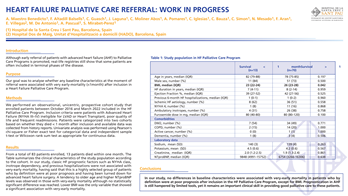
We conducted a prospective observational study at the outpatient cardiology unit of a large university hospital in Belgium. The Be-PICT was used to measure indicators for palliative care in all patients with ACHD. For this purpose, a clinician answers the surprise question, followed by assessing 7 frailty and 9 incurability criteria to identify patients eligible for PC. Frailty criteria are general indicators for poor or deteriorating health, while incurability criteria represent the presence of a life-limiting condition (Table 1). Data were managed in REDcap. We conducted item- and outcome level frequency analysis on the Be-PICT.
We included 483 patients (50% M, 50% F) with a mean age of 42.4 years (SD=15.4). Severe ACHD was present in 12.01% of the cohort. Four patients (0.8%), aged 48-67 years, met the criteria for PC, three of whom had severe ACHD (Table 2). In 3.7 % of cases (n=18), clinicians indicated they would not be surprised if the patient were to die within the next 6-12 months. When evaluating the individual PC indicators (Table 1), substantial weight loss and severe comorbidities were most frequently reported (n=14; 2.9%), followed by patients being bed- or chair bound and a need for intensified care (n=6; 1.2%). A request for palliative care was identified only once. Frailty syndrome was the most commonly reported incurability criterion (n=9; 1.8%).
This study found that indicators for specialized PC referral in patients with ACHD are primarily frailty-related, including indicators such as weight loss, comorbidities and frailty syndrome. Given the dramatic increase in life expectancy among ACHD patients over recent decades, frailty-related issues and age-associated comorbidities are expected to become increasingly common. The presence of these characteristics may serve as a meaningful indicator for PC needs that extend beyond considerations of life expectancy alone.


You may be interested in