Beyond survival: mortality, morbidity, health-related quality of life and the psychosocial effects of aortovascular manifestations in Marfan syndrome patients
European Journal of Cardiovascular Nursing


Abstract
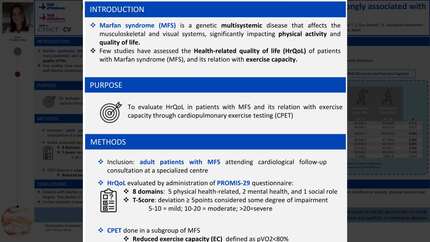
Advances in surveillance and prophylactic aortic intervention have markedly reduced aortovascular mortality in Marfan syndrome (MFS). However, the impact of aortovascular (AV) morbidity and survival on health-related quality of life (HRQoL) and psychosocial well-being remains insufficiently understood.
To evaluate mortality, morbidity, HRQoL and the psychosocial effects of diagnosis and surgery in MFS patients.
A secondary data analysis of national databases was conducted to assess mortality and morbidity outcomes of aortovascular surgery (AVS) in adult MFS. In parallel, mixed-method and prospective observational studies were performed in MFS patients with documented AV manifestations and those who had AVS, respectively. A sample of 75 and 28 participants were recruited, respectively, based on power analysis. HRQoL and psychosocial outcomes were measured using seven validated patient-reported outcomes questionnaires for HRQoL [SF36 and EQ-5D-5L], depression [CESD], illness perception [IPQ], fatigue [FSS], self-esteem [RSES], stigma [PSQ]. Descriptive and inferential statistics for quantitative studies, Kaplan Meier survival curves for mortality and the Framework method for qualitative data analysis were used. Results were compared with English general population and adjusted for age and sex.
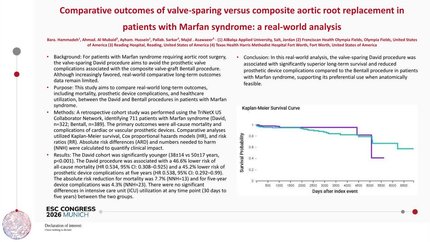
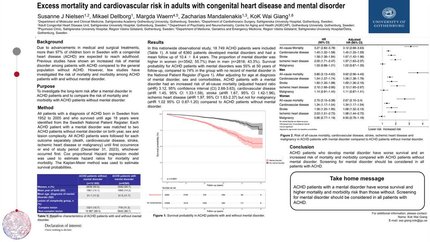
Secondary data analysis (n=1026) demonstrated low (1.4% probability) AV mortality but the majority (n=958, (93.4%)) experienced substantial burden of morbidity due to AVS complications and cardiovascular problems.
Despite improved survival, clinically meaningful impairments in HRQoL was determined: HRQoL in MFS found to be lower than the general population in all SF36 (p<0.006) and EQ-5D-5L sub-scales (p<0.001). The majority of participants who had AV manifestations reported experiencing moderate/severe depression (54.7%), pain (84%) and fatigue (59.7%). Similar results were found in patients who had AVS, with symptoms found to be worse postoperatively: moderate/severe depression (pre: 57.1% vs post: 57.7%), pain (pre: 88% vs post: 96.2%) and fatigue (pre: 75% vs post: 84.6%). However, self-esteem remains positive and participants did not feel devalued/discriminated due to their condition for both patient group.
This novel PhD programme of work showed that while advancement in surgical management of MFS is associated with favourable survival, patients experienced substantial aortovascular morbidity and sustained impairment in HRQoL and psychosocial well-being. Integrating patient-reported outcomes with traditional clinical endpoints provides a more comprehensive assessment of long-term outcomes and may inform improvement in patients pathway and multidisciplinary care strategies.
Contributors

R Magboo
Author
St Bartholomew's Hospital London , United Kingdom of Great Britain & Northern Ireland

A Oo
Author
J Cooper
Author
D Gibbs
Author
G Owens
Author
M Field
Author
Liverpool Heart and Chest Hospital Liverpool , United Kingdom of Great Britain & Northern Ireland
U Ahearn
Author
C Rajakaruna
Author

You may be interested in