Implementation of a nursing assessment checklist for acute heart failure patients in a tertiary cardiac critical care unit
European Journal of Cardiovascular Nursing


Abstract
Acute heart failure (AHF) is a major cause of hospitalization in cardiac critical care units (ICCU), requiring rapid assessment and continuous monitoring. Nurses play a key role in early detection of clinical deterioration; however, the absence of standardized nursing assessment tools may delay interventions and negatively impact outcomes.
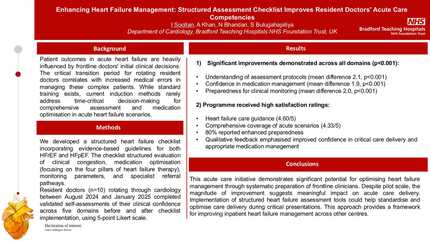
To evaluate a standardized nursing checklist for early assessment and monitoring of acute heart failure patients admitted in a tertiary hospital ICCU.
A retrospective observational study was conducted over a 3-month period in the ICCU of a tertiary hospital including 217 patients admitted with acute heart failure (AHF), representing 22.32% of total admissions. A nursing assessment checklist was applied at admission and every day till discharge, focuing on four key domains: respiratory status (respiratory rate, SpO2), hemodynamic stability (SBP<100mmHg, mental status) congestion signs (peripheral oedema, dyspnea severity) , and renal function (24h/h diuresis and creatinine). ). A delta ±10% was considered clinically relevant. Patients were classified as improved (≥10% improvement in all domains), unchanged (10% worsening in any domain), and stratified by HF phenotype (de novo AHF vs worsening HF).
Among 217 AHF patients significant daily variations, particularly for hemodynamic, respiratory and congestion status. At discharge: 81% improved, 12% unchanged, 7% worsened, with differences between de novo and worsening HF. There were significant differences between de novo vs worsening HF (Table 1). In 73% of de novo AHF and 61% of worsening HF, nursing checklist prompted changing medical decision. The checklist prompted treatment changes in 73% of de novo and 61% of worsening cases, facilitating early detection, timely interventions, diuretic optimization, better communication, standardized care, and improved safety.
Implementation of a standardized nursing checklist in daily practice proved highly practical and effective for acute heart failure patients. It enabled early detection of clinical deterioration, enhanced interdisciplinary communication, directly supported medical decision-making, and revealed phenotype-specific differences warranting further research.
Contributors


You may be interested in