Monoclonal antibodies targeting IL-5/5R or IL-4/13 pathways in eosinophilic myocarditis: a single-centre experience and systematic literature review
European Heart Journal - Cardiovascular Pharmacotherapy


Abstract
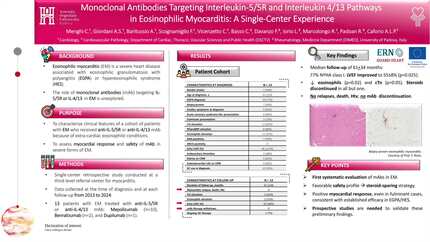
Eosinophilic myocarditis (EM) is a rare inflammatory heart disease often associated with eosinophilic granulomatosis with polyangiitis or hypereosinophilic syndrome. While anti–IL-5/5R and anti–IL-4/13 monoclonal antibodies (mAbs) efficacy in systemic eosinophilic diseases is established, data on EM are lacking. We aimed to (1) characterize a single-centre cohort of EM patients treated with mepolizumab, benralizumab, or dupilumab in combination with glucocorticoids and/or immunosuppressants; (2) systematically review published cases, comparing them with a contemporary cohort; and (3) evaluate myocardial response and safety of mAbs in EM, in comparison with a historical cohort treated without mAbs at our centre.
Thirty-seven EM patients were included (19 from a contemporary cohort, 18 from the literature; 51% male; median age 47 years). Biologic treatments were mepolizumab (81%), benralizumab (14%), and dupilumab (5%). Median time to mAb initiation was 2.5 months; treatment duration 24 months. No EM relapses, deaths, or heart transplantations occurred. Glucocorticoids were tapered and withdrawn in 89% of cases, with no mAb discontinuations due to adverse events. In the contemporary cohort, mAb therapy was associated with improved LVEF (47%–55%,
In EM within eosinophilic disease, anti–IL-5/5R and anti–IL-4/13 mAbs showed steroid-sparing effects and favourable safety, suggesting potential benefit for disease control.
Contributors

Andrea S Giordani
Author
Caterina Menghi
Author
Anna Baritussio
Author
Federico Scognamiglio
Author
Cristina Vicenzetto
Author
Federica Davanzo
Author
Luca Iorio
Author
Renzo Marcolongo
Author
Monica De Gaspari
Author
Stefania Rizzo
Author

Roberto Padoan
Author

You may be interested in