Kidney function and acid–base status as gatekeepers of natriuretic and diuretic responsiveness in chronic HF: insights from the DEA-HF clinical trial
European Heart Journal - Cardiovascular Pharmacotherapy


Abstract
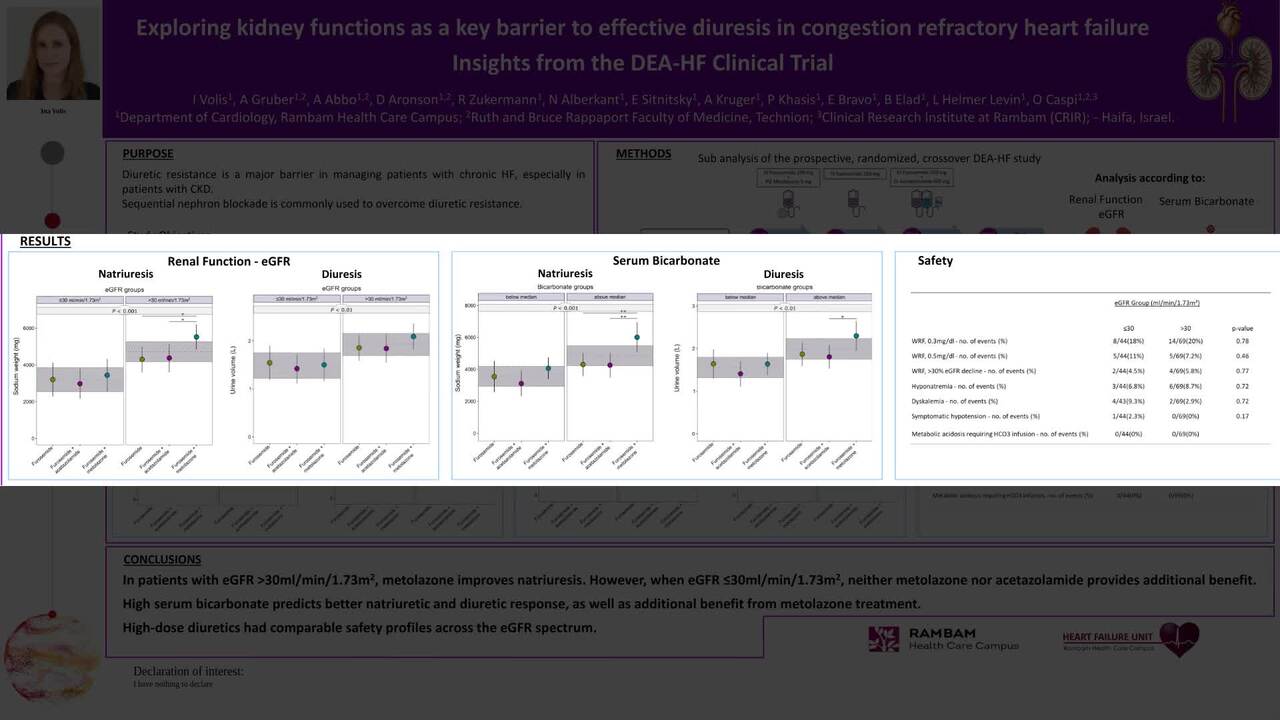
In chronic heart failure (HF), decongestion is hindered by reduced renal function and diuretic resistance. This study compared the effect of eGFR and serum bicarbonate on three diuretic regimens in congestion-refractory HF patients.
This is a prespecified post-hoc analysis of DEA-HF, a randomized, crossover trial (
In ambulatory patients with congestion-refractory HF and eGFR > 30 mL/min/1.73m2, natriuretic and diuretic responses are augmented across all regimens, with metolazone providing additional improvement in natriuresis. When eGFR ≤ 30 mL/min/1.73m2, neither metolazone nor acetazolamide provides additional benefit. High serum bicarbonate predicts better natriuretic and diuretic response, as well as additional benefit from metolazone treatment. High-dose diuretics had comparable safety profiles across the eGFR spectrum.
Contributors

Ina Volis
Author
Amit Gruber
Author

Doron Aronson
Author
Nicolas Girerd
Author
Søren Lund Kristensen
Author
Robert Zukermann
Author
Natalia Alberkant
Author
Elena Sitnitsky
Author
Anton Kruger
Author
Polina Khasis
Author
Evgeny Bravo
Author
Boaz Elad
Author
Ludmila Helmer Levin
Author

You may be interested in