Ultra-processed foods, lifestyle management, and cardiovascular diseases A clinical consensus statement of the European Society of Cardiology Council for Cardiology Practice and the European Association of Preventive Cardiology of the European Society of Cardiology
European Heart Journal


Abstract
Ultra-processed foods (UPFs) have increasingly displaced traditional diets globally and have become a significant public health concern, particularly in relation to cardiovascular (CV) diseases. UPFs are defined as food products primarily composed of cheap industrial ingredients, additives, and neo-formed compounds, often with little to no nutritional value. These foods are highly processed and contain additives that can have harmful effects on health. While traditional dietary guidelines have long emphasized the importance of limiting animal-derived fats and promoting the intake of fruits, vegetables, and unsaturated fats, recent evidence suggests that the extent and nature of food processing are also key factors in the relationship between diet and health.
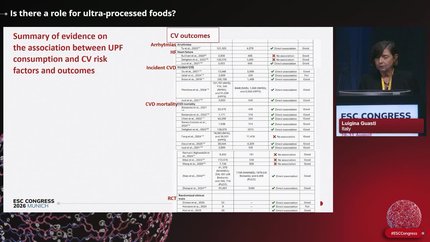
Studies over the past decade have highlighted that the consumption of UPFs is associated with increased CV risk, often independent of the overall diet quality.
Despite growing evidence linking UPF consumption to major CV risk factors (e.g. hypertension, dyslipidaemia, obesity) and adverse CV outcomes, the role of food processing in CV health remains underrecognized in cardiology. Current dietary counselling in clinical practice tends to overlook the potential adverse impact of UPFs, with patients not receiving comprehensive nutritional guidance.
This European Society of Cardiology (ESC) clinical consensus statement, developed by a multidisciplinary group of European experts, is conceived to increase awareness among clinicians about the CV risks associated with UPFs. Starting from a comprehensive review of current evidence, it provides practical, actionable advice to help the general cardiologists incorporate UPF-related assessment and counselling into their routine care. The statement also proposes a stepwise framework focused on CV prevention, including tools designed to enhance patient communication and engagement. Moreover, it discusses these clinical advices within wider strategic and policy frameworks, therefore supporting a more integrated, food-centred approach to improve CV health.
Contributors


Marialaura Bonaccio
Author
NEUROMED Scientific Institute for Research and Healthcare Pozzilli , Italy
Ana Abreu
Author

Maira Bes-Rastrollo
Author
Ruxandra Christodorescu
Author
Giovanni de Gaetano
Author

Pedro Marques-Vidal
Author
Atul Pathak
Author
Dimitri Richter
Author
Sukshma Sharma
Author
Catarina Sousa Guerreiro
Author
Bernard Srour
Author
Saverio Stranges
Author
Mathilde Touvier
Author
Branislav Vohnout
Author
Massimo Piepoli
Author
Licia Iacoviello
Author
You may be interested in