C-terminal long-QT type 1 R562S-Kv7.1 variant, the first variant in helix C impairing β-adrenergic response of the slow delayed rectifier K+ channel
EP Europace Journal


Abstract
Kv7.1 variants, associated with long QT syndrome type 1 (LQT1) and altering the function of the slow delayed rectifier K+ (
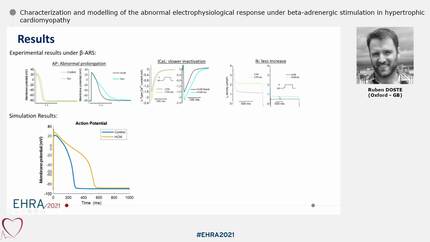
The clinical and genetic investigation was followed by functional analysis (whole-cell patch clamp, confocal microscopy, computational simulations) and structural modelling. The genetic analysis suggested that R562S-Kv7.1 might be a founder LQT1 variant in Central Europe. R562S carriers showed a significantly prolonged corrected QT (QTc) interval at rest and a significantly higher QTc prolongation after exercise vs. healthy relatives. The functional analysis of R562S channels demonstrated their preserved membrane localization, a significant decrease in
R562S-Kv7.1 is the first variant in helix C causing an impaired response of
Contributors

Olga Švecová
Author
Roman Kula
Author
Nina Kadášová
Author
Jindřich Lněnička
Author
Iva Synková
Author
Dominika Traj
Author
Larisa Chmelikova
Author
Michal Pásek
Author
Jan Hošek
Author
Katarzyna Anna Radaszkiewicz
Author
Irena Andršová
Author
Pavel Vít
Author
Karel Berka
Author

You may be interested in