Cardio amyloid-artificial intelligence: advanced multi-modal screening for transthyretin cardiac amyloidosis in severe aortic stenosis patients
European Heart Journal - Digital Health


Abstract
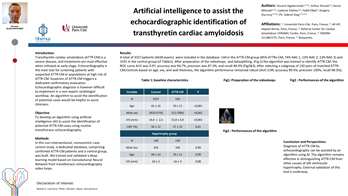
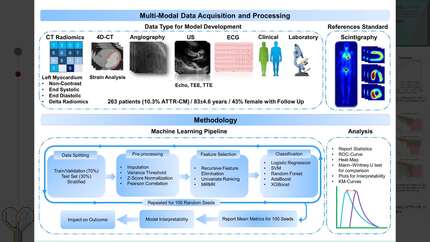
Early detection is important given the availability of new disease-modifying therapies and the high prevalence of transthyretin amyloid cardiomyopathy (ATTR-CM) among patients with aortic stenosis (AS) undergoing transcatheter aortic valve replacement (TAVR). We developed a multi-modal artificial intelligence (AI) model for early detection of ATTR-CM using chest computed tomography (CT), echocardiography, and electrocardiography. This approach may provide a scalable strategy for preclinical monitoring.
This retrospective study included patients who underwent technetium-99m–pyrophosphate (PYP) scintigraphy at two academic medical centres: Columbia University Irving Medical Center and Weill Cornell Medicine. ATTR-CM status was determined using a composite reference standard incorporating PYP scan interpretation, laboratory tests, and endomyocardial biopsy results when available. The diagnostic performance of the model was measured by the area under the receiver operating characteristic curve (AUROC), sensitivity, specificity, and predictive values at various thresholds. Among 816 patients (median age 79.0 years, 61.2% male), 127 (15.6%) had confirmed ATTR-CM. Patients with ATTR-CM were older, more often male, and had characteristic echocardiographic features, including increased wall thickness and reduced ejection fraction. In the independent TAVR test cohort, the multi-modal AI model achieved an AUROC of 0.85 [95% confidence interval (CI): 0.74–0.93], significantly outperforming single-modality approaches in our data. At the optimal threshold, the model demonstrated 73.3% sensitivity, 82.9% specificity, and 96% negative predictive value.
A multi-modal AI approach using routinely acquired chest CT, echocardiography, and electrocardiography data can enable screening for ATTR-CM in TAVR patients, potentially facilitating earlier diagnosis and treatment initiation.
Contributors

Nusrat Binta Nizam
Author
Ashley N Beecy
Author
Jacob W Groenendyk
Author
Fengbei Liu
Author
Nelson I Barrera
Author
Chris Kelsey
Author
David vanMaanan
Author
Jeffrey Ruhl
Author
Naomi Tesfuzigta
Author
Ilan Richter
Author
Mathew S Maurer
Author
Gabriel Sayer
Author
Deborah Estrin
Author
Parag Goyal
Author
Nir Uriel
Author
Mert R Sabuncu
Author
You may be interested in