Clinical improvement of functional mitral and tricuspid regurgitation following transcatheter aortic valve implantation with the NAVITOR VISION system: a case report
European Heart Journal - Case Reports


Abstract
Concomitant mitral regurgitation (MR) and tricuspid regurgitation (TR) are frequently encountered in patients with severe aortic stenosis (AS) and are associated with adverse clinical outcomes after transcatheter aortic valve implantation (TAVI). However, the impact of transcatheter heart valve selection on post-procedural multi-valvular haemodynamics remains incompletely understood.
An 87-year-old woman with symptomatic low-flow, low-gradient AS complicated by moderate-to-severe MR and severe TR was admitted with refractory heart failure despite intensive medical therapy. Given her advanced age, frailty, and high surgical risk, transfemoral TAVI was performed using a 23-mm Navitor™ Vision valve (Abbott Structural Heart, Santa Clara, CA, USA).
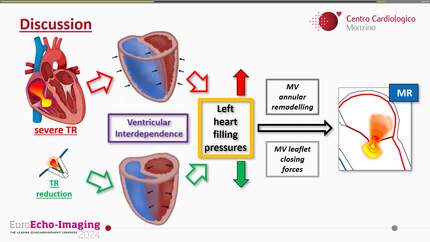
Valve selection was guided by the presence of a small aortic annulus and the need to balance optimal haemodynamic performance with minimization of potential mitral valve interaction. The procedure was successfully completed without significant residual transvalvular gradient or paravalvular leakage. Following TAVI, relief of afterload was achieved, leading to improvement in functional MR and TR, with discontinuation of inotropic support. Follow-up echocardiography demonstrated a reduction in both MR and TR, accompanied by a decrease in right ventricular systolic pressure.
We report a case of symptomatic low-flow, low-gradient AS with concomitant MR and TR that was successfully treated with TAVI using a Navitor Vision valve. In patients with small annuli and complex multi-valvular disease, careful transcatheter heart valve selection and procedural optimization may facilitate favourable haemodynamic outcomes and reverse remodelling.
Contributors

Joshi Tsutsumi
Author
Tatsuki Doijiri
Author
Minako Hayakawa
Author
Mimiko Tabata
Author
Christoph Sinning
Author
Giulio Russo
Author
Poonam Velagapudi
Author
Deepti Ranganathan
Author
You may be interested in