Superiority of wall motion score index over left ventricle ejection fraction in predicting cardiovascular events after an acute myocardial infarction
European Heart Journal - Acute CardioVascular Care


Abstract
There are few data on the prognostic significance of the wall motion score index compared with left ventricle ejection fraction after an acute myocardial infarction. Our objective was to compare them after the hyperacute phase.
Transthoracic echocardiograms were performed in 352 consecutive patients with myocardial infarction, after the first 48 hours of admission and before hospital discharge (median 56.3 hours (48.2–83.1)). We evaluated the ability of the wall motion score index and left ventricular ejection fraction to predict the combined endpoint (mortality and rehospitalization for heart failure) as a primary objective and the independent events of the combined endpoint as a secondary objective.
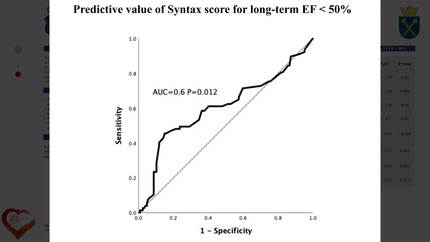
In 80.7% of patients, the wall motion score index was high despite having an ejection fraction >40%. No patient had an ejection fraction <55% with a normal index. After a follow-up of 30.5 months (24.2–49.5), both variables were predictors of the composite endpoint and all-cause mortality (
Both variables provide important prognostic information after a myocardial infarction. Beyond the hyperacute phase, wall motion score index is a more powerful prognostic predictor, especially in subgroups with less myocardial damage.
Contributors


Pilar Agudo-Quílez
Author
Belén Rubio-Alonso
Author
Javier Molina
Author
Belén Díaz
Author
Julio García-Tejada
Author
Roberto Martín
Author
Rocío Tello
Author
You may be interested in