QT prolongation following premature ventricular contractions: a potential marker of concealed long QT syndrome
EP Europace Journal


Abstract
Long QT syndrome (LQTS) predisposes to malignant ventricular arrhythmias, yet diagnosis is often challenging in patients with borderline QTc. Premature ventricular contractions (PVCs) may unmask concealed repolarization abnormalities.
To evaluate whether post-PVC QTc prolongation can distinguish confirmed LQTS patients, healthy controls, and borderline index cases.
We retrospectively analyzed 24-hour ECG recordings from 76 subjects: 10 with clinically or genetically confirmed LQTS, 64 healthy controls, and 2 index patients with borderline baseline QTc. QTc before and after PVCs was measured, with ANCOVA used for between-group comparisons and paired t-tests for within-patient changes. Index cases were described qualitatively.
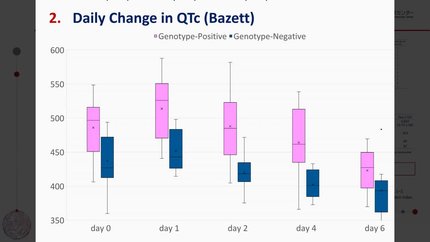
Post-PVC QTc was higher in LQTS patients than in controls (488 ± 23 ms vs 391 ± 37 ms; adjusted p = 0.066). Across the cohort, PVCs prolonged QTc by +15.7 ms (95% CI 7.1–24.3; p = 0.0005), with greater increases in LQTS patients (+22.3 ms; p = 0.0019) than in controls (+10.0 ms; p = 0.0098). The two index patients demonstrated extreme responses, with QTc increasing from borderline baseline values (360–460 ms) to 540–600 ms (Δ≈165 ms).
PVC-induced QTc prolongation differentiates normal, overt LQTS, and borderline cases. While controls showed mild physiologic adaptation, LQTS patients exhibited consistent abnormal prolongation, and index patients showed extreme unmasking. Post-PVC QTc assessment may represent a simple bedside tool for diagnosis and risk stratification in LQTS, but larger prospective studies are needed for validation.
Contributors


You may be interested in