Optimizing patient triage on the waiting list for transcatheter aortic valve replacement: the clinical utility of the cardiac damage staging system
European Heart Journal - Quality of Care and Clinical Outcomes


Abstract
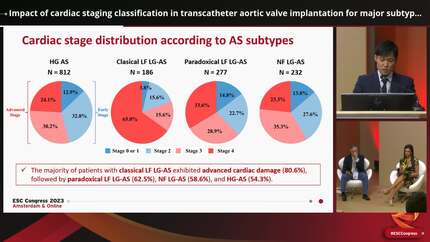
Access to transcatheter aortic valve replacement (TAVR) is generally prioritized for symptomatic patients presenting with severe heart failure, syncope, angina, and decrease in left ventricular ejection fraction <40%. However, a substantial number of patients die while awaiting TAVR. In response to rising demand driven by an ageing population, it is essential to stratify interventions, as proposed by Généreux’s Aortic Stenosis staging.
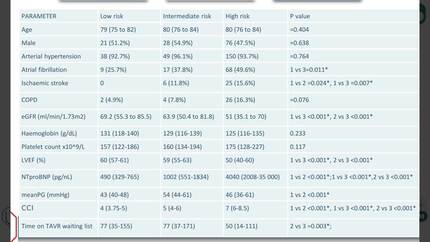
We conducted a retrospective, single-center, longitudinal study in patients referred for TAVR. We specifically analysed the characteristics of 98 patients who died while on the TAVR waiting list. The primary outcome was all-cause mortality from the time of a patient’s inclusion on the TAVR waiting list or non-proceeding to TAVR. The overall proportion of deceased patients was 8.4% [95% confidence interval (CI), 6.9–10.1] and 4% when excluding deaths occurring after 2019. By 3 months, 61.2% of patients had undergone TAVR, and this increased to 85.4% at 6 months. Deaths occurred in 6.3% of patients by 3 months and 7.8% by 6 months. We notice that 90% of deaths took place within the first 3 months. Multivariable analysis identified several variables independently associated with mortality on the TAVR waiting list: prior myocardial infarction [subdistribution hazard ratio (sHR), 1.87 (95% CI, 1.12–3.13);
These findings suggest that TAVR candidates at Généreux stages 3 and 4 should receive higher priority on the waiting list.
Contributors

Karen Boyer
Author
Francois Severac
Author
Antonin Trimaille
Author
Kévin Roulot
Author
Shinnosuke Kikuchi
Author

Patrick Ohlmann
Author

You may be interested in