Pulsed field ablation vs. thermal ablation for pulmonary vein isolation: a network meta-analysis of randomized controlled trials
EP Europace Journal


Abstract
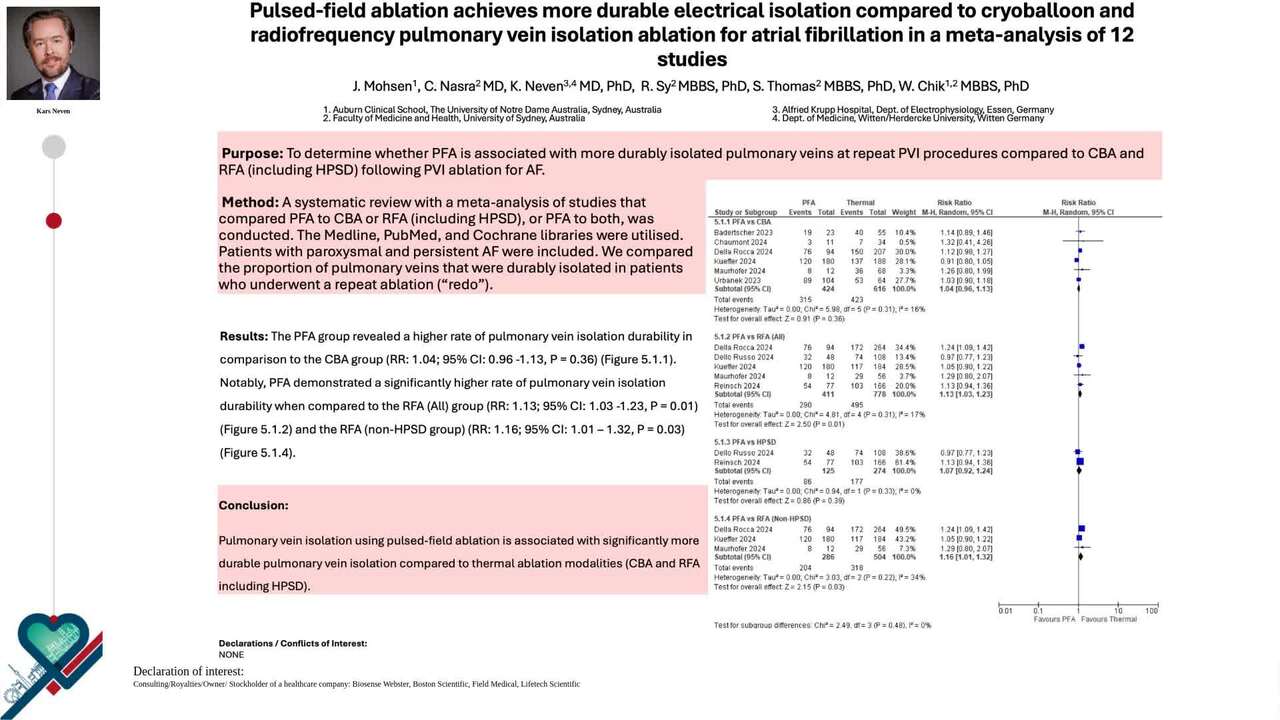
Pulsed field ablation (PFA) has recently emerged as a promising alternative to conventional energy sources (ES) for atrial fibrillation (AF) ablation. However, comparative data between PFA and other ES—such as radiofrequency (RFA), cryoballoon (CBA), and laser balloon ablation (LBA)—remain limited.
This network meta-analysis (CRD420251054760) aimed to compare outcomes of PFA vs. thermal ES for AF ablation.
A systematic network meta-analysis using PubMed, Cochrane, and EMBASE from inception to March 2026 was performed. Randomized controlled trials comparing different ES in first-attempt pulmonary vein isolation were included. Data extraction was performed according to PRISMA guidelines. The primary outcome was the recurrence of any sustained atrial tachyarrhythmia (ATA) at 12-month follow-up. Safety and efficiency outcomes were also compared among groups. We included 18 studies, encompassing 4162 patients. Compared to PFA, thermal ablation technologies showed a higher risk of ATA recurrence at 12-month follow-up (RFA: RR of 1.48 (95% CI 1.10–2.00); CBA: 1.43 (95% CI 1.07–1.92); LBA: RR 1.29 (CI 95% 0.84–1.98)). PFA exhibited the lowest procedural time among transcatheter ES, whereas RFA displayed a significantly lower fluoroscopy time. No significant differences were recorded for major periprocedural complications. A subgroup analysis restricted to studies involving only paroxysmal AF patients, as well as those employing contemporary technologies, yielded consistent findings.
The present data indicate that, in patients undergoing a first transcatheter AF ablation, PFA may be associated with favourable efficacy and procedural efficiency compared with traditional thermal technologies, while showing a broadly comparable safety profile.
Contributors


Mattia Penna
Author

Federico Landra
Author


Sebastiano Carli
Author

Chiara Valeriano
Author

Aurora Sanniti
Author
Cristina Panico
Author

Massimo Vito Tritto
Author

Diego Penela
Author
You may be interested in