Case report: CMR work-up for a case of long QT syndrome, dilated left ventricle, and hypertension—when incidental findings unmasked the fundamental issue
European Heart Journal - Case Reports


Abstract
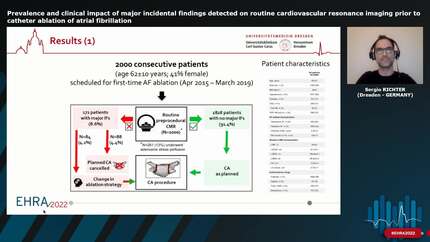
Cardiac magnetic resonance imaging (CMR) is increasingly used for detailed evaluation of cardiac structures and function. Its wide field of view also allows identification of extracardiac abnormalities, some of which may significantly impact clinical management.
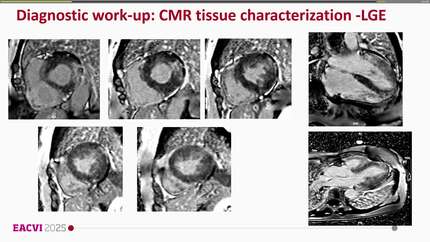
We present a case of a 44-year-old woman referred for evaluation of prolonged QT interval and hypertension. Investigations revealed mild left ventricular dilatation, and suspicion of long QT syndrome (LQTS). CMR clarified the underlying cardiac abnormalities, identifying a patent ductus arteriosus (PDA) as the likely cause of volume overload and left ventricular dilatation. Importantly, it also revealed a right adrenal lesion. Subsequent endocrine work-up confirmed primary hyperaldosteronism (Conn’s syndrome), explaining patient’s hypertension, hypokalaemia, and QT prolongation. The patient underwent successful radiofrequency ablation of the adrenal adenoma and percutaneous PDA closure. These interventions led to normalization of blood pressure, serum potassium levels, and QTc interval, and allowed discontinuation of antihypertensive medications and potassium supplementation.
This case highlights the importance of recognizing significant extracardiac findings on CMR. Such findings can prompt the timely diagnosis of systemic conditions and lead to substantial changes in clinical management. Furthermore, the case emphasizes the importance of evaluating secondary causes of hypertension and acquired long QT syndrome.
Contributors

Nang Aye
Author
Eirini Velegraki
Author
Raad H Mohiaddin
Author
Sardorkhon Sultankhonov
Author
Asmaa El Abbady
Author
Deepti Ranganathan
Author
You may be interested in