From angiography-derived physiology guided PCI to INOCA treatment and to coronary sinus reducer: navigating multiple pathophysiological targets in a single patient: a case report
European Heart Journal - Case Reports


Abstract
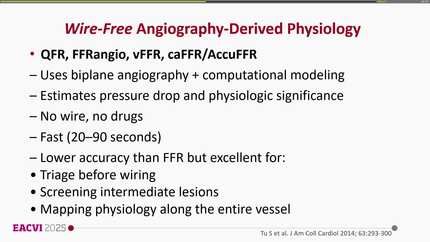
Intermediate coronary lesions without clear ischaemia should prompt physiological assessment during angiography. Angiography-derived fractional flow reserve enables rapid, wire-free evaluation of lesion significance and can guide revascularization decisions. Persistent angina despite successful percutaneous coronary intervention (PCI) should raise suspicion for concomitant microvascular dysfunction, warranting microcirculation assessment to identify the mechanism and tailor therapy. When no further epicardial target exists and symptoms remain refractory despite comprehensive medical management, coronary sinus reducer (CSR) implantation can be considered. Although these three domains have rapidly evolved over the past few years, they are rarely combined sequentially. This case report illustrates how the stepwise use of these contemporary tools, each addressing a distinct pathophysiological mechanism, led to a marked improvement in the patient’s symptoms and overall clinical course.
A 45-year-old man presented with acute coronary syndrome and underwent multivessel PCI in 2023. One year later, he re-presented with unstable angina and received optical coherence tomography-guided left main to left anterior descending artery stenting. However, symptoms persisted (Canadian Cardiovascular Society class II). Invasive coronary function testing revealed impaired vasodilatory reserve with preserved microvascular resistance and no inducible spasm, suggesting functional impairment of vasodilatory capacity. Mechanism-matched therapy with calcium-channel blockade and angiotensin-converting enzyme inhibition provided partial relief. Refractory angina ultimately led to CSR implantation with complete resolution of symptoms.
This case highlights a stepwise physiology-first approach, progressing from epicardial revascularization to ischaemia with no obstructive coronary arteries phenotyping and ultimately venous outflow modulation for refractory angina.
Contributors

Jeremie Buri
Author
Adil Salihu
Author
Marion Dupré
Author
Alexandre Berger
Author
Stephane Fournier
Author
Doralisa Morrone
Author
Youssef Mahmoud AbdElMoneim
Author
Deepti Ranganathan
Author
You may be interested in