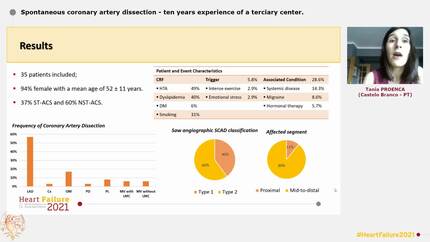
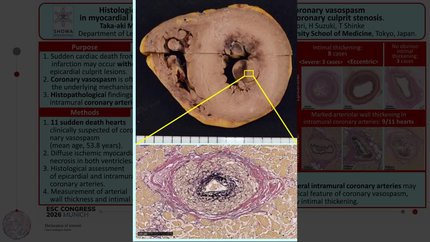
Coronary endothelial function and spontaneous coronary artery dissection
European Heart Journal - Acute CardioVascular Care


Abstract
To investigate the role of endothelial function in patients with previous spontaneous coronary artery dissection.
Mechanisms underlying spontaneous coronary artery dissection, including a possible contribution from endothelial dysfunction, remain poorly understood.
This was a single center, retrospective study of patients with a prior spontaneous coronary artery dissection episode who underwent invasive endothelial function testing in the cardiac catheterization laboratory for evaluation of recurrent chest pain. Coronary epicardial and microvascular responses to acetylcholine, adenosine, and nitroglycerine were assessed. Findings were compared to a reference group of normal controls (
A total of 10 patients with prior angiographically confirmed spontaneous coronary artery dissection were referred for coronary endothelial function testing. The median coronary flow reserve was 2.8 (interquartile range (IQR) 2.3, 3.6). The median change in coronary diameter with acetylcholine was −0.9% (IQR −23.9, 4.2). The median increase in peak coronary blood flow following acetylcholine administration was 91.4% (IQR 9.1, 105.7), which was similar to the response observed in a reference group of patients (median age 51 years, 96% women) from our laboratory with normal microvascular responses to acetylcholine: 107.4% (IQR 75.5, 165.7;
Coronary epicardial and microvascular vasomotor dysfunction is not a predominant feature of spontaneous coronary artery dissection. Endothelial dysfunction is not implicated as the principal underlying mechanism.
Contributors

Thomas M Waterbury
Author
Marysia S Tweet
Author
Sharonne N Hayes
Author
Abhiram Prasad
Author
Amir Lerman
Author
You may be interested in