Young adults in the cardiac intensive care unit: insights from the Critical Care Cardiology Trials Network registry
European Heart Journal - Acute CardioVascular Care


Abstract
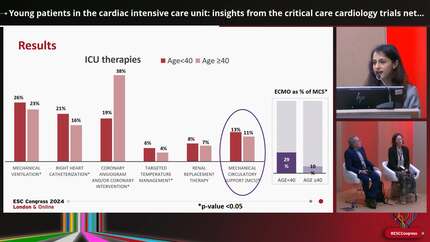
While the aging cardiac intensive care unit (CICU) population has been well studied, young adults represent a distinct and underexplored subgroup. We aimed to characterize the demographics, clinical presentations, resource utilization, and outcomes of young adults admitted to contemporary CICUs.
We analysed consecutive adult CICU admissions from 2018 to 2023 within the Critical Care Cardiology Trials Network, a multicentre registry of advanced CICUs in North America. Patients aged 18–39 years were classified as ‘young adults’ and compared with those aged ≥40 years. Among 29 035 CICU admissions, 6.7% (
Young adults admitted to the CICU represent a clinically distinct population, with higher rates of high-acuity presentations and intensive resource use yet lower short-term mortality.
Contributors

Michael C Kontos
Author
Shuangbo Liu
Author
Adriana Luk
Author
Venu Menon
Author
Siddharth M Patel
Author
Robert O Roswell
Author

Ameesh Isath
Author
Brigham and Women's Hospital, Harvard Medical School Boston , United States of America
David A Morrow
Author
Tanya Sharma
Author
Uzair Mahmood
Author
Damien Smith
Author
David D Berg
Author
Erin A Bohula
Author
Sunit-Preet Chaudhry
Author
Lori B Daniels
Author
Xuan Ding
Author
Christopher B Fordyce
Author
Daniel Gerber
Author
Michael Goldfarb
Author
Jianping Guo
Author
You may be interested in