Transcatheter closure of a ruptured sinus of Valsalva aneurysm—a minimally invasive approach to a rare cardiac emergency: a case report
European Heart Journal - Case Reports


Abstract
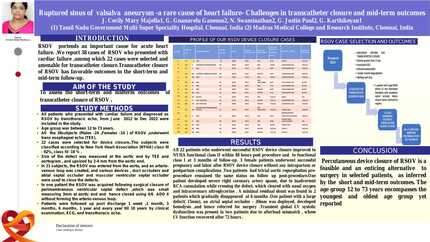
Sinus of Valsalva aneurysm (SVA) is a rare but clinically significant cardiac anomaly, arising congenitally or through acquired causes. Typically, asymptomatic until rupture, this condition can precipitate acute or subacute heart failure via a pathological left-to-right shunt. While surgical repair has long been considered the definitive treatment, advances in high-resolution imaging and percutaneous device technology have established transcatheter closure as a compelling, minimally invasive alternative in anatomically suitable patients.
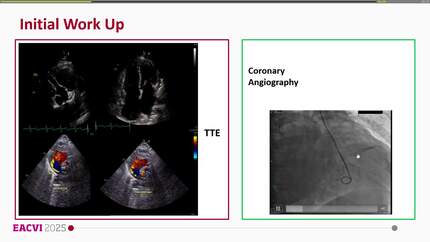
We present a case of a ruptured noncoronary sinus of Valsalva aneurysm creating a left-to-right shunt into the right ventricle. Despite the potentially life-threatening haemodynamic implications, the patient maintained stability. Multimodal imaging—including transoesophageal echocardiography and computed tomography angiography—precisely delineated the defect and informed procedural strategy. The patient underwent a successful percutaneous transcatheter closure using a patent ductus arteriosus occluder device, with no procedural complications. Follow-up evaluation confirmed complete defect occlusion and preservation of aortic valve integrity, with no residual shunting.
This case underscores the expanding role of transcatheter interventions in the management of ruptured SVAs, highlighting the importance of meticulous imaging and patient selection to achieve excellent clinical and structural outcomes. It contributes to the growing evidence supporting minimally invasive alternatives to surgery in selected structural heart diseases.
Contributors

Bahram Shahri
Author
Mohsen Moohebati
Author
Mostafa Ahmadi
Author
Mahdi Kahrom
Author
Christoph Jensen
Author
Poonam Velagapudi
Author
Dino Miric
Author
Deepti Ranganathan
Author
You may be interested in