Genetic evaluation of early-onset atrial fibrillation: impact on patient management
European Heart Journal


Abstract
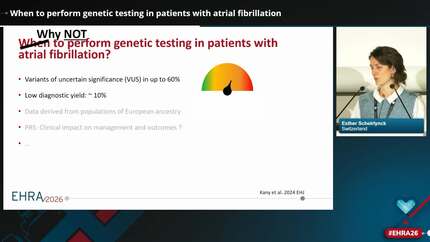
Genetic testing is recommended for select patients with atrial fibrillation (AF). The aims of this study were to define the results of genetic evaluation and its therapeutic impact for patients referred to a dedicated AF precision medicine clinic.
Patients diagnosed with AF before age 60 were candidates for referral. In addition to standard evaluation with history, physical exam, and electrocardiogram (ECG), genetic evaluation included a three-generation pedigree, cardiac imaging, ambulatory monitoring, and clinical genetic testing with a cardiomyopathy/arrhythmia panel.
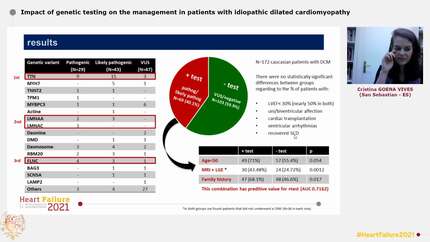
Overall, 264 participants were referred: the median age was 47 years (Q1, Q3: 38, 55), 77 (29%) were female, and 236 (89%) were White. Median age at AF diagnosis was 39 years (Q1, Q3: 31, 48), and median time from AF diagnosis to evaluation was 3.7 years (Q1, Q3: 0.9, 10). A total of 242 patients (92%) underwent genetic testing, which identified a pathogenic or likely pathogenic variant in 48 (20%). The strongest predictors of positive genetic testing were history of cardiomyopathy, infranodal conduction disease, and elevated T1 or late gadolinium enhancement on cardiac magnetic resonance imaging (all
Genetic testing was positive in 20% of patients with early-onset AF referred to a dedicated AF precision medicine clinic. Genetic testing results may change clinical management in genotype-positive patients.
Contributors

J Lukas Laws
Author
Mahsima Shabani
Author
Hollie L Williams
Author
Dakota D Grauherr
Author
Wendy M Kilbourne
Author
Diane M Crawford
Author
Isaac Ogunmola
Author
Lili Sun
Author
Zain Virk
Author
Brianna Cathey
Author
Majd A El-Harasis
Author
Cassady J Pelphrey
Author
Joseph A Quintana
Author
Brittany S Murphy
Author
Giovanni E Davogustto
Author
M Edward Ponder
Author
Omeed M Irani
Author
J Michael Daw
Author
Bibin T Varghese
Author
Pablo Saavedra
Author
Robert L Abraham
Author
Juan C Estrada
Author
Katherine T Murray
Author
Walter K Clair
Author
Sharon T Shen
Author
Arvindh N Kanagasundram
Author
Jay A Montgomery
Author
Christopher R Ellis
Author
Frank Fish
Author
Travis D Richardson
Author
George H Crossley
Author
Rebecca R Hung
Author
Jeffrey M Dendy
Author
Adam Wright
Author
Quinn S Wells
Author
Fei Ye
Author
Harikrishna Tandri
Author

William G Stevenson
Author
Vanderbilt University Medical Center Nashville , United States of America
Megan Lancaster
Author
Prince J Kannankeril
Author
Lynne W Stevenson
Author
Dan M Roden
Author
Zachary T Yoneda
Author
M Benjamin Shoemaker
Author
You may be interested in