SPARK score: comprehensive risk stratification in patients with moderate aortic stenosis
European Heart Journal Supplements


Abstract
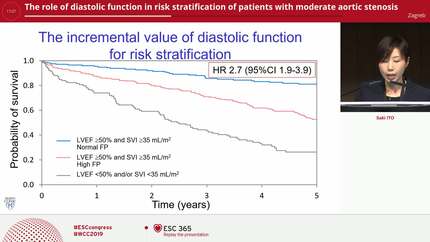
Patients with moderate aortic stenosis (AS) have an increased risk of adverse cardiovascular (CV) outcomes.
The present study aimed to identify the predictors of adverse CV outcomes in patients with moderate AS and combine them in a new scoring system suitable for risk stratification.
This multicenter, retrospective study enrolled consecutive patients diagnosed with moderate AS at three Italian centers between 2019 and 2023. The primary endpoint was a composite of CV death or heart failure (HF) hospitalization. Patients who developed severe AS during follow-up were censored to restrict the analysis to moderate AS-related events.
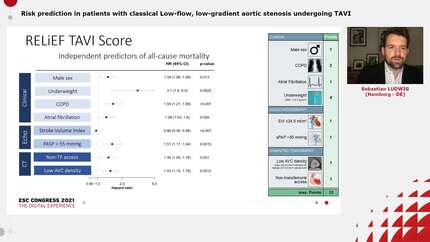
The study included 520 patients (mean age 78±9 years; 46% female). During a mean follow-up of 2.0±0.9 years, 59 patients (11.4%) experienced the primary endpoint. The independent predictors of primary endpoint were: (1) Lateral E/e’ >14 (HR 4.35, 95% CI 2.63-7.7; p<0.001), (2) LVEF <50% (HR 3.39, 95% CI 1.98-5.81, p<0.001), (3) PASP >40 mmHg (HR 1.99, 95% CI 1.17 - 3.39, p=0.011), (4) Hb <13 mg/dL (HR 1.94, 95% CI 1.01-3.79, p=0.049), and (5) eGFR <45 mL/min (HR 1.87, 95% CI 1.07-3.27, p=0.028). A new scoring system (the SPARK score) was developed and internally validated based on these variables (High- vs. Low-risk SPARK score: HR: 7.3; 95% CI 4.4-12.3; p<0.001).
The SPARK score, based on accessible clinical, laboratory and echocardiographic parameters, offers a practical approach to tailor risk stratification in moderate AS patients with initial signs of myocardial damage. Further studies are required to evaluate its impact on clinical outcomes.
Contributors

C Gaspardone
Author
D Romagnolo
Author
A Tripoli
Author


G Barone
Author

G Fiore
Author

F Maisano
Author
A Margonato
Author
You may be interested in