Polymer-free amphilimus-eluting stents vs. biodegradable-polymer everolimus-eluting stents in all-comers undergoing pci: 2-year results of the PARTHENOPE trial
European Heart Journal Supplements


Abstract
Over the past few decades, percutaneous coronary intervention (PCI) has undergone significant advancements as a result of the combination of device-based and drug-based therapies. These iterations have led to the development of polymer-free drug-eluting stents. However, there is a scarcity of data regarding their clinical performance on the long-term follow-up.
To report the long-term follow-up of a randomized trial comparing polymer-free vs. biodegradable-polymer drug-eluting stents in patients undergoing PCI.
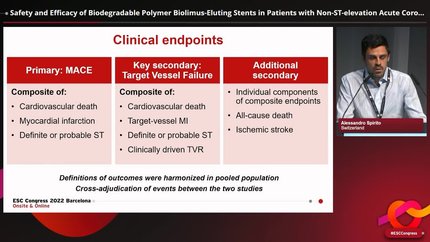
The PARTHENOPE trial was a phase IV, prospective, randomized, multicenter, investigator-initiated, assessor-blind study, which was conducted at 14 centers in Italy (NCT04135989). Nearly unselected patients undergoing PCI were randomly assigned to polymer-free amphilimus-eluting stents or biodegradable polymer everolimus-eluting stents. The primary endpoint was the composite of cardiovascular death, target-vessel myocardial infarction, or target-lesion revascularization. Primary analyses were done in the intention-to-treat population. The non-inferiority between the two study devices was already shown at 1-year follow-up. Herein, we provided the final follow-up at 2 years.
Between Jan 22, 2020 and June 22, 2022, 2,107 patients with 3,042 coronary lesions were randomized to polymer-free amphilimus-eluting stents (1,051 patients) or biodegradable polymer everolimus-eluting stents (1,056 patients). Most (1,607 or 76.3%) patients presented with acute coronary syndrome. At 2-year follow-up, the primary endpoint occurred in 106 (10.1%) patients randomized to polymer-free amphilimus-eluting stents and 112 (10.6%) patients randomized to biodegradable polymer everolimus-eluting stents (hazard ratio, HR, 0.96, 95% confidence intervals, CIs, 0.73 to 1.25, p=0.741). There were no differences in the components of the primary endpoint, including cardiovascular death (HR 1.08, 95%CI to 1.66), target-vessel myocardial infarction (HR 0.94, 95%CI 0.65-1.36), and clinically-indicated target-lesion revascularization (HR 0.90, 95%CI 0.52-1.56). Results for the primary endpoint were consistent across several prespecified subgroups.
In allcomers undergoing PCI, polymer-free amphilimus-eluting stents were associated with a similar clinical performance in comparison to biodegradable polymer everolimus-eluting stents at 2-year follow-up.
Contributors


You may be interested in