Pre-procedural time spent in atrial fibrillation using intermittent ECG monitoring is associated with arrhythmia recurrence after ablation: the ISOLATION cohort study
EP Europace Journal


Abstract
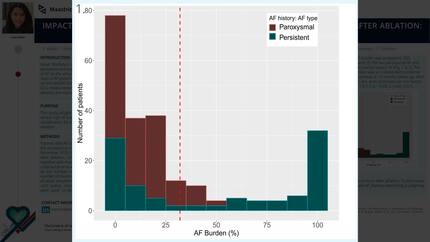
Atrial fibrillation (AF) is conventionally classified as paroxysmal or persistent. AF burden might better reflect response to rhythm-control interventions. This study evaluated the association between estimated pre-procedural time spent in AF and recurrences after AF ablation, compared with conventional AF classification.
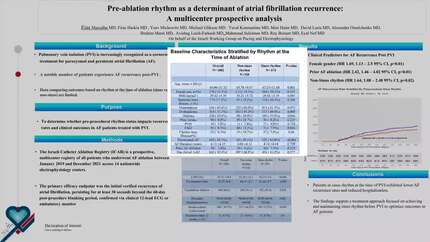
In patients scheduled for AF ablation, clinical characteristics were collected before ablation, and 60-second single-lead ECGs were recorded three times daily (with additional symptom-triggered recordings) for four weeks. Pre-procedural time spent in AF was estimated as the number of days with detected AF divided by total monitoring days. The primary endpoint was AF recurrence between 3 and 12 months post-ablation. Of 302 patients (mean age 64 ± 9 years; 33% female), 201 (67%) had paroxysmal AF and 101 (33%) had persistent AF. After 12 months, recurrence rates were higher in persistent than in paroxysmal AF (37.6% vs. 24.4%,
A higher pre-procedural percentage of time spent in AF derived from 60-second single-lead ECGs is independently associated with atrial arrhythmia recurrence after ablation. Assessing the percentage of pre-procedural time spent in AF might help identify paroxysmal AF patients with a high AF recurrence risk in future studies.
Contributors

Stef Zeemering
Author
Kevin Vernooy
Author
Dominik Linz
Author

Ulrich Schotten
Author
Cardiovascular Research Institute Maastricht (CARIM) Maastricht , Netherlands (The)
Zarina Habibi
Author

Dominique V M Verhaert
Author
Maastricht University Medical Centre (MUMC) Maastricht , Netherlands (The)

Ozan F Özgül
Author
Cardiovascular Research Institute Maastricht (CARIM) Maastricht , Netherlands (The)
Konstanze Betz
Author
Ben J M Hermans
Author
Suzanne A M Philippens
Author
Sevasti-Maria Chaldoupi
Author
Bart Maesen
Author

Jos G Maessen
Author
Aaron J Isaacs
Author
Sjoerd W Westra
Author

You may be interested in