PO89
Neonatal LQT3 due to de novo SCN5A: p.(A1656V) variant: genotype-directed therapy
European Journal of Preventive Cardiology


Abstract
Congenital long QT syndrome type 3 (LQTS3) poses the highest perinatal arrhythmic risk, typically presenting with foetal bradycardia, 2:1 atrioventricular block, extreme QTc prolongation, and frequent refractoriness to beta-blockade, underscoring the need for genotype-directed management from birth.
A late-gestation foetus with sinus bradycardia and intermittent 2:1 block was delivered at 37+1 weeks; the neonate had QTc >800 ms and recurrent torsades de pointes (TdP) despite propranolol, magnesium and esmolol, prompting day-8 video-thoracoscopic left cardiac sympathetic denervation (LCSD) to stabilise malignant arrhythmias. An implantable loop recorder (ILR) was placed.
Genetic analysis identified the heterozygous de novo p.(A1656V) rare variant in the SCN5A gene. The variant was absent in the population databases. Located in the DIII–DIV inactivation-gate hot-spot, computational tools predicted a deleterious role, all together lending evidence for pathogenicity.
Residue-level evidence is strengthened by a nearby substitution at the same codon p.(A1656D) that produces gain-of-function late INa and shows selective rescue by mexiletine, suggesting mechanistic analogy for both pathogenicity and sodium-channel blocker responsiveness in this region.
A lidocaine challenge test on day 15 produced marked QTc shortening consistent with late INa attenuation, guiding initiation of mexiletine followed by flecainide as genotype-directed therapy, with sustained QTc improvement and suppression of breakthroughs on loop recording after LCSD.
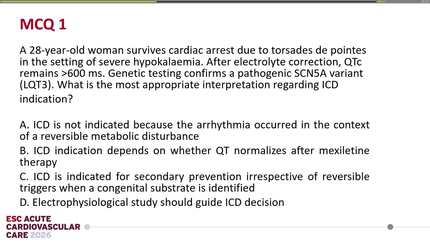
In line with guidance endorsing mexiletine for LQT3 and LCSD when symptoms recur despite optimised therapy, long-term strategy included single- then dual-chamber ICD with atrial pacing to optimise beta-blockade, and at 7 years the child remains stable on mexiletine, flecainide, propranolol and magnesium with QTc <500 ms and no recent ICD therapies.
By coupling LCSD and continuous monitoring with genotype-guided late INa blockade, care aligned with contemporary recommendations and likely prevented early sudden death while enabling durable control of a high-risk LQTS3 phenotype from the neonatal period onwards.
Contributors

Andrea Greco
Author
Estefania Martinez-Barrios
Author
Jose Carlos Cruzalegui
Author
Fredy Chipa Ccasani
Author
Erika Fernanda Merchan Pinto
Author
Oscar Campuzano Larrea
Author
Georgia Sarquella-Brugada
Author
You may be interested in