PO07
Genotype–phenotype correlations in paediatric arrhythmogenic cardiomyopathies
European Journal of Preventive Cardiology


Abstract
Arrhythmogenic cardiomyopathies (ACMs) in the paediatric population remain under-represented in the literature. Robust genotype–phenotype correlation data in children are lacking, limiting our ability to predict disease expression and outcomes in this vulnerable group.
This study aimed to characterise and compare patients harbouring pathogenic variants in plakophilin (PKP2), desmoplakin (DSP), and gene-elusive ACMs.
We retrospectively analysed demographic, clinical, and outcome data in 57 children with a definitive ACMs diagnosis: PKP2 (n=9), DSP (n=12), and gene-elusive (n=36). Patients were further stratified into five genetic groups: PKP2 (n=7), PKP2 homozygotes (n=2), DSP (n=6), DSP compound heterozygous (n=6), and gene-elusive (n=36).
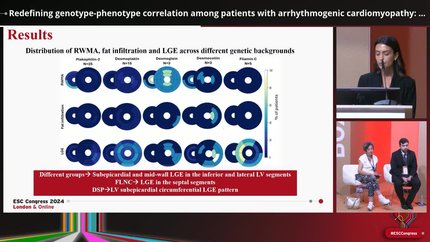
Phenotype distribution varied significantly across genotype groups (p<0.05). All PKP2 and PKP2 homozygotes presented with arrhythmogenic right ventricle cardiomyopathy (ARVC), while DSP variants predominantly manifested as dilated cardiomyopathy (DCM) (100% in DSP biallelic), 31% non-dilated left ventricle cardiomyopathy (NDLVC) in DSP. Gene-elusive individuals showed a balanced distribution among ARVC (36%), DCM (33%), and NDLVC (31%).
Age-related parameters differed significantly (p<0.05), with DSP homozygotes diagnosed earlier than PKP2 and gene-elusive cases. Time to diagnosis was also shorter in DSP carriers compared to gene-elusive patients (Table 1). Female prevalence varied between groups (p=0.029), being 100% in PKP2 carriers and only 39% in gene-elusive. Proband status differed significantly (p=0.0038), with all DSP and PKP2 biallelic being probands, compared to only 14% in PKP2 monoallelic individuals. A higher proportion of early diagnosis (at/before baseline) was observed in gene-elusive (76%) and PKP2 homozygotes (100%), though this difference was not statistically significant (p=0.058).
Adverse clinical outcomes also differed by genotype. Heart transplantation was more common in DSP biallelic (67%) and DSP heterozygotes (17%) (p=0.0001), with no cases in PKP2 or gene-elusive patients. All deaths occurred in the DSP homozygous group (p=0.0015). Ventricular arrhythmias were more frequent in DSP biallelic (100%) and PKP2 (43%) (p=0.018). Cardiac arrest was observed only in PKP2 homozygotes and gene-elusive individuals (p=0.059). Atrial arrhythmias were exclusive to gene-elusive patients (28%), suggesting a distinct atrial substrate in this group.
Our findings highlight significant genotype-related differences in phenotype expression, age of onset, and clinical outcomes in paediatric ACMs. Biallelic DSP pathogenic variants are associated with earlier onset and more severe ventricular disease, whereas gene-elusive patients present with more variable phenotypes and a distinct atrial arrhythmia profile. These results support the importance of genotype-driven risk stratification in children with ACMs.
Contributors

Sara Moscatelli
Author
Ella Field
Author
Leonie Luedke
Author
Lucy Thorogood
Author
Annabelle Barnes
Author
Gabrielle Norrish
Author
Juan Pablo Kaski
Author
You may be interested in