Bidirectional ventricular tachycardia and cardiogenic shock caused by acute haemorrhagic necrosis of pheochromocytoma: a case report
European Heart Journal - Case Reports


Abstract
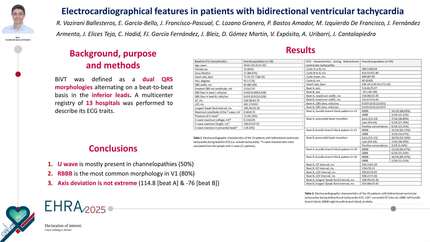
Pheochromocytoma is associated with serious cardiovascular complications resulting from the effect of catecholamines, such as ventricular arrhythmias, cardiomyopathy with left ventricular dysfunction, and cardiogenic shock. Bidirectional ventricular tachycardia (BVT) is a rare but potentially fatal form of polymorphic tachycardia associated with elevated sympathetic tone.
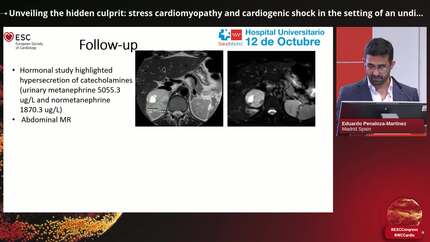
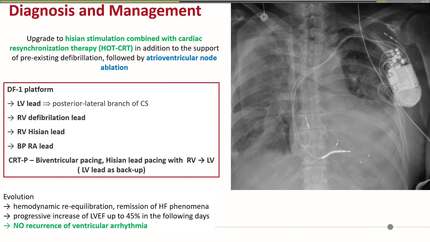
A 27-year-old Caucasian woman was admitted to the intensive care unit with cardiogenic shock. The electrocardiogram showed BVT, and the transthoracic echocardiogram showed a dilated left ventricle with severe systolic dysfunction. Computed tomography revealed an adrenal mass with haemorrhage, which was confirmed by abdominal magnetic resonance imaging. The patient underwent a laparoscopic right adrenalectomy after pre-operative preparation with alpha–beta blockade, with subsequent histopathological confirmation of the diagnosis.
The acute presentation of haemorrhagic necrosis of a pheochromocytoma is a rare and potentially lethal condition. Its diagnosis can be challenging, especially in cases with atypical manifestations. However, the presence of BVT might serve as a crucial guide for its identification. Early recognition of this condition is essential, as it significantly impacts the patient's prognosis.
Contributors

Charigan Abou Jokh-Casas
Author
Jorge Armesto-Rivas
Author
Gonzalo De Urbano-Seara
Author

Stefan Simovic
Author
Boldizsar Kovacs
Author
Vera Maslova
Author
Deepti Ranganathan
Author
You may be interested in