ANCA-associated vasculitis following sotatercept initiation in a patient with heritable pulmonary arterial hypertension and previously silent eosinophilic granulomatosis with polyangiitis: a case report
European Heart Journal - Case Reports


Abstract
Pulmonary arterial hypertension (PAH) is a progressive disease characterized by increased pulmonary vascular resistance and right ventricular failure. Sotatercept, a novel activin receptor ligand trap, has demonstrated promising haemodynamic benefits in PAH treatment. Eosinophilic granulomatosis with polyangiitis (EGPA) is an extremely rare, Th2-driven, small-vessel vasculitis, and its overlap with PAH is scarcely reported.
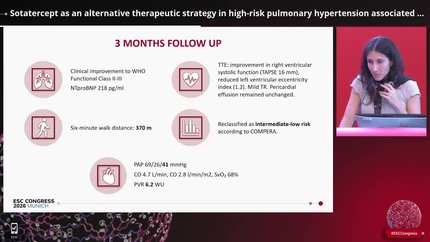
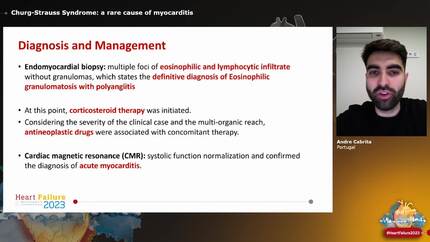
We report the case of a woman with heritable PAH initially stabilized with oral therapy. In 2024, after further clinical decline, subcutaneous treprostinil was initiated. Subsequently, sotatercept was added, resulting in brief clinical improvement. Within weeks, however, the patient developed severe eosinophilia and exhibited laboratory and histopathological evidence of p-ANCA-positive necrotizing vasculitis, accompanied by renal and hepatocellular dysfunction.
This case suggests that sotatercept’s modulation of the TGF-β pathway may unmask latent autoimmune diseases such as EGPA in predisposed individuals. Although the temporal relationship between sotatercept initiation and the onset of vasculitis is compelling, both causality and underlying molecular mechanisms remain to be elucidated. Further studies are necessary to understand the potential immunomodulatory mechanisms of sotatercept.
Contributors


Silvia Mancini
Author
Federica Decandia
Author
Pierluigi Merella
Author
Gavino Casu
Author
Massimo Mapelli
Author
Marie Luise Dikou
Author
Shahrukh Hashmani
Author
Deepti Ranganathan
Author
You may be interested in