Blood pressure, plasma proteins, and cardiovascular diseases: a network Mendelian randomization and observational study
European Heart Journal


Abstract
The biological pathways leading to elevated blood pressure (BP) and subsequent cardiovascular diseases (CVDs) remain incompletely understood. Investigating the proteomic landscape of BP and its overlap with CVD could provide critical insights into the molecular determinants and pathways involved in BP regulation and its subsequent effect on CVD.
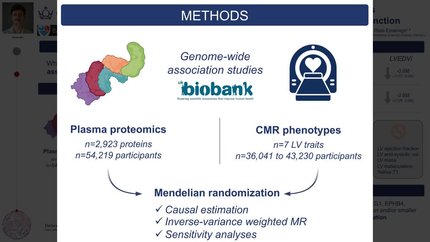
A proteome-wide Mendelian randomization (MR) study was conducted by leveraging genetic instruments from 2007 plasma proteins to assess their causal effects on BP (systolic and diastolic BP). Proteins showing strong associations with BP were further analyzed for potential causal effects on coronary artery disease (CAD) and stroke subtypes. Network MR was performed to estimate the proportion of CVD risk mediated through BP. Bayesian colocalization was applied to determine whether identified associations share common causal variants. Observational associations were examined in UK Biobank participants to assess associations between proteins, BP, and incident CVD events using linear regression and Cox proportional hazard models.
Proteome-wide MR identified 242 proteins associated with BP, of which 48 were also linked to CAD or stroke, with four (ACOX1, FGF5, FURIN, MST1) also supported by genetic colocalization analyses (FDR 5% and PP ≥70%). Genetically predicted FURIN and FGF5 were strongly associated with BP and stroke risk, while ACOX1, FGF5, and MST1 exhibited potential causal effects on CAD. Network MR suggested that a substantial proportion of their effect on CAD and stroke (30.5%–77.2%) was mediated through BP regulation. Observational analyses further supported these findings.
This study identifies key plasma proteins with potential causal roles in BP regulation and CVD risk, highlighting BP as a major mediator of their effects on CAD and stroke. These findings provide novel insights into the molecular mechanisms underlying hypertension-related CVD and identify promising protein targets for further investigation.
Contributors

Devendra Meena
Author
Jingxian Huang
Author
Alexander Smith
Author
James Yarmolinsky
Author
Siwei Wu
Author
Fotios Koskeridis
Author
Yi-Hsuan Ko
Author
Marie-Joe Dib
Author
Charalabos Antonatos
Author
Yiannis Vasilopoulos
Author
Xinzhu Yu
Author
Georg W Otto
Author
Dipender Gill
Author
Manuel Mayr
Author
Paul Elliott
Author

Abbas Dehghan
Author
Imperial College London London , United Kingdom of Great Britain & Northern Ireland
Ioanna Tzoulaki
Author
Imperial College London London , United Kingdom of Great Britain & Northern Ireland
You may be interested in