Circadian heart rate fluctuations predict cardiovascular and all-cause mortality in type 2 and type 1 diabetes: a 21-year retrospective longitudinal study
European Journal of Preventive Cardiology


Abstract
Circadian heart rate (HR) fluctuations are associated with cardiovascular health. We examined their relationship with microvascular disease and long-term survival in patients with diabetes.
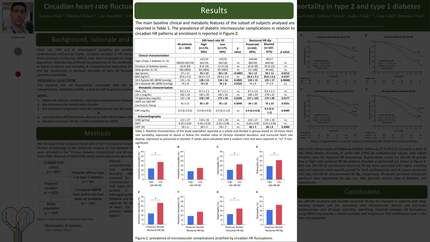
In this secondary analysis from the CHAMP1ON cohort of 497 adults with metabolic disease, 349 participants who had type 1 or type 2 diabetes, baseline 24-h ambulatory blood pressure and HR monitoring (ABPM), and survival data over a 21-year observational follow-up were included. Clinical features, microvascular complications, and mortality rates were examined in participants with low circadian HR fluctuations [24-h HR standard deviation (SD) below the median of 30.4] and blunted nocturnal HR dip (<10%). Low 24-h HR SD and blunted nocturnal HR dip were associated with an adverse cardiometabolic risk profile and 12–23% higher prevalence of cardiac autonomic neuropathy and nephropathy. After 6251 person-year follow-up [21.0 (14.0–21.0) years], a total of 136 (39%) deaths occurred, of which 100 (68%) of cardiovascular cause. The low 24-h HR SD group had a higher risk for both cardiovascular [adjusted hazard ratio (aHR) 2.00, 95% confidence interval (CI) 1.30–3.08,
Impaired circadian HR fluctuations are associated with microvascular disease and long-term cardiovascular and all-cause mortality in diabetes. The ABPM-derived HR measures may provide a widely available and inexpensive risk stratification tool in this high-risk population.
Contributors


Martina Chiriacò
Author
Luca Sacchetta
Author
Diego Moriconi
Author
Lorenza Santoni
Author
Nicola Riccardo Pugliese
Author
Simone Gallo
Author
Noemi Cimbalo
Author
Giovanna Forotti
Author
Giuliano Chiriacò
Author
Simone Leonetti
Author
Andrea Natali
Author
You may be interested in