Thrombolysis in spontaneous coronary artery dissection: a case report of acute catastrophic dissection requiring coronary artery bypass surgery and delayed heart transplant in a young woman with fibromuscular dysplasia
European Heart Journal - Case Reports


Abstract
Spontaneous coronary artery dissection (SCAD) is a rare condition characterized by a tear in the coronary artery wall and is often associated with fibromuscular dysplasia (FMD). It is unclear whether SCAD with FMD represents a progressive pathology that leads to both acute and chronic complications, including myocardial damage and advanced heart failure.
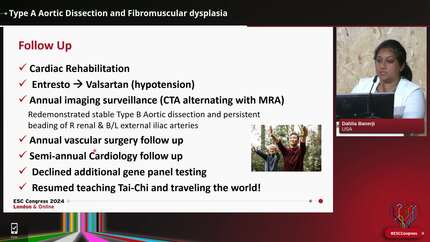
A 43-year-old woman with chest pain was initially diagnosed with ST-elevation myocardial infarction and later found to have SCAD involving the left main, left anterior descending, and left circumflex arteries. She developed cardiogenic shock requiring emergent coronary artery bypass surgery (CABG). She had a prolonged course with underlying FMD, superior mesenteric artery dissection, multiple decompensated heart failure, and cardiogenic shock ultimately requiring a heart transplant after 2 years.
Revascularization in SCAD is not well defined with limited data. The incidence of cardiogenic shock is 1.2%–15.9%. There are case reports on mechanical circulatory support (MCS), CABG, and heart transplantation. This case is unique requiring MCS and CABG with SCAD and heart transplant after 2 years.
Contributors

Bishow Paudel
Author
Andrew Lenneman
Author
Jose Tallaj
Author
Joanna Joly
Author
Erik J Orozco-Hernandez
Author
Zaid Iskandar
Author
Stefano Albani
Author
Oswaldo Aldana Varela
Author
Shaheen Ahmad
Author
Natale Daniele Brunetti
Author
Deepti Ranganathan
Author
You may be interested in