Familial risk of Wolff–Parkinson–White syndrome: a nationwide family study in Sweden
EP Europace Journal


Abstract
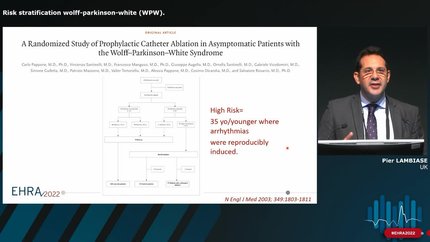
Wolff–Parkinson–White (WPW) syndrome is a rare cardiac disorder that predisposes to supraventricular arrhythmias. Prognosis is usually benign, yet there is an increased lifetime risk of sudden death. While typically sporadic, familial clustering has been reported. This study aimed to assess the risk of WPW, arrhythmias, and mortality among siblings of individuals with WPW.
This population-based sibling cohort included 5 338 434 individuals born in Sweden (1932–2018), with 3172 WPW cases identified from the Swedish National Patient Registers. Familial risks among siblings were assessed using incidence rate ratios (IRRs) and adjusted subdistributional hazard ratios (SHRs). Sensitivity analyses excluded syndromic WPW and cases without electrophysiologic procedural confirmation. Although familial occurrence of WPW was exceedingly rare with only 14 of 3172 cases (0.4%; ≈0.0003% of the total population), siblings of affected individuals showed a significantly higher rate of WPW diagnosis (0.121 vs. 0.032 per 1000 person-years; IRR 3.83; 95% CI 2.27–6.46;
WPW features familial aggregation and increased arrhythmic risk among siblings of affected individuals despite its extremely low absolute frequency in the general population. The evidence of a measurable hereditary component within an otherwise sporadic, non-syndromic condition points to a genetic contribution driven by complex inheritance patterns.
Contributors


Mirnabi Pirouzifard
Author

Jan Sundquist
Author
Kristina Sundquist
Author

Richard Sutton
Author
Imperial College London London , United Kingdom of Great Britain & Northern Ireland

Bengt Zöller
Author
You may be interested in