Fibrosis-related differences of endomyocardial immune infiltrates in heart failure with preserved ejection fraction
European Heart Journal


Abstract
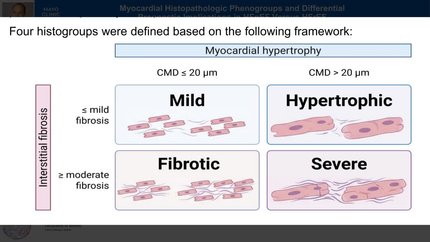
Accumulating evidence implicates infiltrating inflammatory cells in the pathogenesis of fibrosis in heart failure with preserved ejection fraction (HFpEF). However, few studies have examined immunological differences between fibrotic grades. To address this gap, the present study aimed to infer the proportions of specific immune cell types in various fibrotic grades and normal endomyocardial tissue in HFpEF.
An established machine-learning deconvolution algorithm was applied to RNA-sequencing data developed from endomyocardial tissue of 68 specimens (24 normal control, 25 mildly fibrotic, 12 moderately fibrotic, and 4 severely fibrotic). A validated gene signature matrix of human haematopoietic cell subsets was used to infer the relative fractions of immune cells present within the various tissue samples classified according to fibrotic grade.
Seven of the 22 immune cell types were found to be different. M2 macrophages were significantly decreased among all three fibrotic grades compared to normal controls, whereas resting NK cells were increased in relative abundance among all three grades compared to controls. Plasma cells were decreased in mild and moderate cases compared to controls. When examining certain T cell populations, CD4 T cells were less abundant in mild and severe cases compared to controls, whereas CD8 T cells were more abundant in mild cases compared to controls.
Specific immune elements may be related to fibrotic pathology in endomyocardial tissue in patients with HFpEF.
Contributors

K O Alnajjar
Author
A A Alnwiji
Author
D A Almousa
Author
S M Al-Yahri
Author
A A Barakat
Author
R A Albar
Author
A M A Mohamed
Author
You may be interested in