Two-year outcomes in acute heart failure patients stratified by left ventricular ejection fraction
European Heart Journal


Abstract
Patients with acute heart failure (AHF) constitute a particularly high-risk population, burdened by significant morbidity and mortality. However, comprehensive data on the relationship between left ventricular ejection fraction (LVEF) and outcomes remain limited.
We aimed to characterize with AHF regarding length of hospital stay (LOS), all-cause mortality, rehospitalization, and major adverse cardiovascular events (MACE) stratified by LVEF groups at 90 days, 1-year and 2-year follow-up.
Design, setting, and participants: We studied patients with AHF enrolled in an ongoing monocenter, prospective clinical trial designed to investigate a heterogeneous, high-risk cardiovascular patient cohort. All patients underwent comprehensive phenotyping and clearly defined clinical endpoint assessment. They were stratified by LVEF into three groups: HFpEF (≥ 50%), HFmrEF (40-49%) and HFrEF (< 40%).
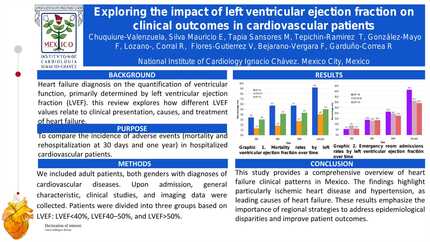
A total of 175 patients (median [IQR] age 73.0 [65.5-79.0] years; 119 male [68.0%]) were included: 80 (45.7%) HFrEF, 26 (14.9%) HFmrEF, 69 (39.4%) HFpEF. The average LOS was 8.0 (6.0–13.0) days, showing minimal variation across groups. Notably, 106 (60.6%) patients had a LOS exceeding 7 days, with the highest proportion seen in the HFmrEF group (76.9%). All-cause mortality was 40%, with the highest cumulative rate observed in the HFmrEF group (46.1%) compared to HFrEF and HFpEF (42.5% and 34.7%). Furthermore, HFmrEF patients showed a significantly higher cumulative incidence of all-cause mortality (19%) within 90 days post discharge compared to HFpEF and HFrEF (9.0% and 8.0%). The cumulative rates of all-cause and HF-related rehospitalization were highest in the HFmrEF group (50.0% and 46.1%, respectively), followed by HFrEF (45.0% and 41.3%) and HFpEF (42.0% and 39.1%). 64 (36.6%) patients experienced the composite endpoint MACE, with the highest incidence observed in HFrEF patients (38.8%), followed by HFpEF (34.8%) and HFmrEF (34.6%). By 18 months, the cumulative MACE rate was highest in HFmrEF patients (57.7%), followed by HFrEF and HFpEF (51.3% and 44.9%).
Patients hospitalized for HFmrEF represent a high risk, yet underexplored population, facing a substantial likelihood of adverse clinical outcomes. Our findings underscore the imperative for further research into this subgroup to enhance our understanding, refine treatment strategies, and ultimately improve patient outcomes. Two-year outcomes stratified by LVEF Incidence for all-cause mortality
Contributors


J Weber
Author
M Ahmadi
Author
J Kollmus-Heege
Author
S Rattan
Author
R Pinto
Author
K Schoenrath
Author
I Rohrpasser-Napierkowski
Author
K U Eckardt
Author
B Pieske
Author
U Landmesser
Author
F Edelmann
Author
You may be interested in