Sphingolipid pathway alterations in myocardial recovery mediated by left ventricular assist device
European Heart Journal


Abstract
Heart failure (HF) has been characterized by altered metabolism including biosynthesis and accumulation of toxic lipid intermediates such as sphingolipids (SGLs). The accumulation of toxic SGLs had previously been associated with metabolic diseases such as obesity and diabetes mellitus. More recently, the accumulation of myocardial ceramides (Cer) has been associated with HF in animal models and humans. However, various circulating SGLs, such as sphingomyelin and sphingosine-1-phosphate (S1P), have also been correlated with cardiometabolic protection.
Given the recent importance given to SGLs in HF development, we sought to investigate the association between serum and cardiac SGLs and myocardial recovery in advanced HF patients following left ventricular assist device (LVAD) support.
We analyzed 85 HF patients undergoing LVAD implantation, 47 LVAD patients undergoing heart transplantation and 13 population-based controls. Patients were retrospectively grouped as responders (R) (defined as patients with combined structural and functional myocardial improvement using a cutoff for left ventricular ejection fraction >40% and left ventricular end-diastolic diameter <6cm within 1 year of LVAD support) or non-responders (NR) (defined as the rest of the patients). Serum and tissue samples were taken upon LVAD implantation and at time of transplant. Serum and cardiac SGLs (Cer, dihydro-Cer, glucosyl-Cer, sphingomyelin, sphingosine, sphinganine, S1P and sphinganine-1-phosphate (Sa1P)) were evaluated by targeted liquid chromatography mass spectrometry and correlated with "myocardial recovery" as described above.
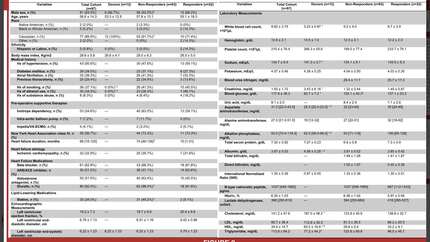
R were more likely female (35%, p=0.002), had shorter HF duration (10 vs 74 months, p<0.05) and less likely to be taking a statin medication (9.1 vs 41.2%, p<0.05) than NR. HbA1c, LDL, HDL and total cholesterol did not differ between the 2 groups (p>0.05). Lipidomic analysis revealed lower circulating Cer, glucosyl-Cer, sphingomyelins, Sa1P and S1P in HF patients compared to controls. Myocardial lipidomics showed elevated dihydro-Cer, Cer and S1P in HF patients versus donors, with NR displaying higher myocardial S1P and Sa1P than R. Post-LVAD, NR had increased circulating very long-chain dihydro-cer and Cer, whereas R had reduced S1P. R also had decreased myocardial dihydro-Cer(16:0) and increased myocardial long-chain glucosyl-Cer and sphingomyelin, sphingosine and Sa1P than NR.
Our findings suggest that serum and cardiac sphingolipids, particularly S1P signaling, are potentially involved in HF and myocardial recovery, offering potential therapeutic targets for improving LVAD outcomes.
Contributors

E Tseliou
Author
Nora Eccles Harrison Cardiovascular Research and Training Institute Salt Lake City , United States of America
R Hamouche
Author
S Tatum
Author
E Dranow
Author
C P Kyriakopoulos
Author
C H Selzman
Author
A G Kfoury
Author
J Stehlik
Author
R Alharethi
Author
J Fang
Author
S Navankasattusas
Author
W L Holland
Author
S A Summers
Author
S G Drakos
Author
You may be interested in