Evaluating the clinical utility of proBNP in patients with heart failure and low ejection fraction
European Heart Journal


Abstract
Recurrent hospitalizations in patients with heart failure and reduced ejection fraction (HFrEF, EF ≤40) represent a significant clinical challenge. For clinicians, determining the optimal discharge timing and assessing rehospitalization risk can be difficult. This study evaluated the role of proBNP (N-terminal pro-B-type natriuretic peptide) levels and other clinical markers in guiding discharge decisions and predicting rehospitalization risk.
This retrospective study included patients with heart failure and reduced ejection fraction who were hospitalized with signs of fluid overload due to decompensated heart failure. Patients who died within 6 months of hospital discharge, underwent coronary or revascularization procedures and lost during follow-up were excluded. Data were collected retrospectively from the cardiology database at Cerrahpaşa Medical Faculty, and follow-up data were gathered using the electronic national healthcare system (e-NABIZ). The primary outcome of our study is to determine the role of pro-BNP level as a predictor of rehospitalization due to heart failure within 6 months of hospital discharge.
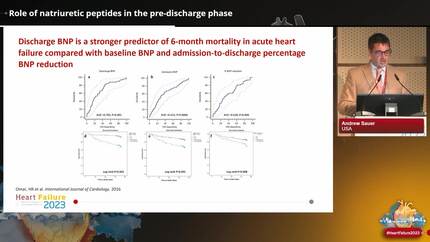
Between 2018 and 2024, 450 patients were identified, and 238 patients were included in the final analysis after the exclusion of patients. ROC curve for the prediction of rehospitalization demonstrated that a 40% decrease in pro-BNP levels demonstrated the best cut-off (AUC: 0.573, sensitivity: 80%, specificity of 27.6%). There were 183 patients with a pro-BNP reduction more than 40% (group 1) and 55 patients with a reduction of 40% or less (group 2). Age, sex and comorbidities were similar between groups. Left ventricular ejection fraction and tissue Doppler velocities were also comparable between groups. In the group with a greater than 40% reduction in probNP levels (183 patients), rehospitalization occurred in 54 patients (29.5%). In contrast, in the group with a reduction of 40% or less (55 patients), rehospitalization occurred in 26 patients (47.3%) (p: 0.016). In addition, discharge pro-BNP levels over 724 pq/dl are also associated with higher rehospitalization. Likewise, cardiac death was also higher in group 2 patients (p:0.024).
While physical examination and patients' symptoms are the principal factors in hospital discharge decisions, our study suggests that a reduction of more than 40% in probNP levels is an important parameter for reducing the risk of rehospitalization, as observed in patients with similar characteristics. Further studies with a higher study population and more extended follow-up data are required to verify our results. Patient demographics Univariate analysis and ROC curve
Contributors

S Sanli
Author
K Temiz
Author
B Abasbekova
Author
Z Soybay
Author
G Incesu
Author
M Cimci
Author
D Raimoglu
Author
You may be interested in