Investigating the role of protease-activated receptor 2 in adverse cardiac remodeling and clinical outcomes in heart failure: insights from translational research
European Heart Journal


Abstract
Functional inhibition of protease-activated receptor 2 (PAR2) via inhibition of its substrate FXa has been shown to reduce adverse clinical outcomes in various HF subgroups, though the mechanism remains unclear. This study aims to conduct a comprehensive translational investigation of the role of PAR2 in HF.
We conducted a biopsy study in HF patients without underlying conditions (n=84) using transvascular right ventricular endomyocardial biopsy (EMB). An exploratory genetic analysis of the HERMES HF cohort (n=583,167) identified F2RL1 (PAR2) variants associated with HF, and the UK Biobank HF cohort (n=18,239) was used to assess the relationship between HF-related mortality and the F2RL1 variant most strongly linked to its expression. Mechanistic studies included ApoE−/− and ApoE−/− PAR2−/− mice on a C57Bl/6 background fed a Western diet (21% fat, 0.15% cholesterol) for four months starting at eight weeks of age.
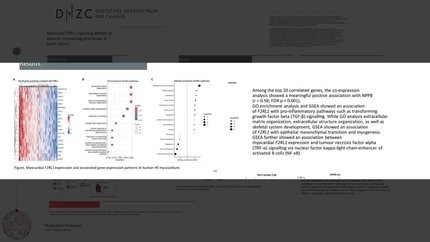
The biopsy study demonstrated that cardiac PAR2 upregulation correlates with increased complement C3 expression, higher NT-proBNP levels, and adverse cardiac remodeling on echocardiography, reinforcing its role in HF progression. Genetic analysis identified a strong association between F2RL1 expression and HF, with rs1529505 emerging as the most robustly linked variant. In the UK Biobank cohort (n = 20,650), rs1529505 was associated with a 16% increased risk of HF-related mortality (OR = 1.16 [1.02-1.32], p = 0.025). Experimental models confirmed a protective effect of PAR2 deficiency, leading to reduced cardiac inflammation (reduced IL-6 and C3) and remodeling markers.
Genetic variants linked to increased PAR2 expression were associated with adverse cardiac remodeling, heightened cardiac inflammation, and elevated HF-related mortality. Notably, the rs1529505 variant emerges as a promising prognostic marker and therapeutic target, potentially paving the way for personalized treatment strategies in HF management.
Contributors

T Reinberger
Author
M Witkowski
Author
A Doerner
Author
S M I Haider
Author
S Szymczak
Author
M S Anker
Author
B Rauch
Author
N Kraenkel
Author
S D Anker
Author
U Landmesser
Author
You may be interested in