Altered arginin-vasopressin (AVP)/apelin system balance in congestive heart failure patients under diuretic resistance: results from a pilot study
European Heart Journal


Abstract
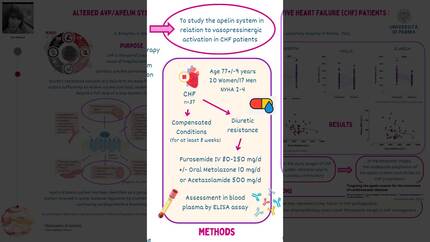
Congestive heart failure (CHF) is a clinical syndrome affecting approximately 64.3 million patients worldwide, with an increasing incidence with age. Diuretics are the cornerstone of CHF therapy. However, in some cases, they become ineffective due to the phenomenon of diuretic resistance (DR), which consists in a failure to increase fluid and sodium output sufficiently to relieve volume overload, oedema or congestion despite a full dose of a loop diuretic. Poor diuretic response predicts subsequent death, hospital readmission or renal complications from CHF. Besides the arginine-vasopressin (AVP) system, which targets water and sodium retention to increase effective circulating volume, the apelin/elabela system and its receptor APJ have recently been identified as paracrine/endocrine molecules involved in water balance regulation by counteracting AVP action and having cardioprotective functions mainly related to their potent inotropic effect.
Our aim was therefore to study the activity of the apelin system in relation to vasopressinergic activation in CHF patients under both compensated and DR conditions.
Thirty-seven patients with CHF were compared to 18 healthy age- and sex-matched subjects. All patients were clinically stable and had been on a consistent treatment regimen for at least 8 weeks prior to enrolment. Under DR conditions, they were monitored daily for body weight, urine output, systolic and diastolic blood pressure and heart rate. They received 80 to 250 mg of furosemide intravenously over 7 hours together with oral metolazone (up to 10 mg/day, n=8) or acetazolamide 500 mg (n=2). In addition to key clinical, metabolic and neurohormonal parameters, plasma levels of copeptin, apelin, and elabela were assessed by ELISA in CHF patients in both compensated and acute congestive conditions.
As expected, CHF patients had increased levels of ANP, BNP, aldosterone and norepinephrine compared to controls, whereas no difference was found concerning metabolic parameters. Interestingly, under DR conditions, plasma levels of copeptin were significantly increased (p<0.001), along with a marked reduction in apelin and especially elabela levels (p<0.0001). In addition, while apelin tended to be positively correlated with glycaemia, insulinemia and HOMA index, elabela was negatively associated with plasma BNP and aldosterone levels, suggesting that apelin and elabela exert divergent physiological effects in the regulation of the cardiometabolic balance.
Based on our data, an altered AVP/apelin balance may represent a key factor in the pathogenesis of CHF, and the apelin system, especially elabela, emerges as a central element in cardiovascular physiopathology. Though a pilot study, our results open the way for further research on this system, which has recently been highlighted as a novel and promising therapeutic target and/or a useful diagnostic/prognostic marker in CHF management. Copeptin levels Apelin and elabela levels
Contributors

A Bongrani
Author
S Mocellin
Author
S Binno
Author
I Verzicco
Author
G Passeri
Author
P Coghi
Author
You may be interested in